


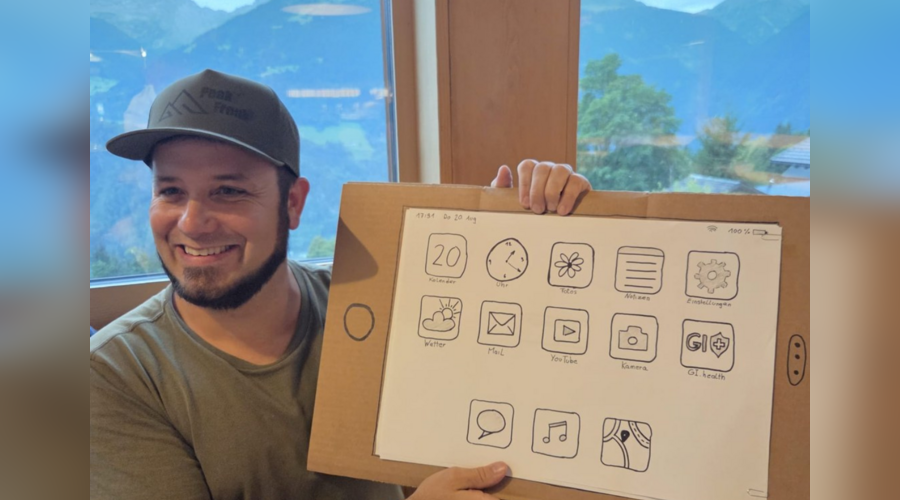
Our engineers bring concepts that could change a product line. Everyone else brings what they see every day: where a customer loses time, which question support keeps answering, which assembly step nobody enjoys. The pitch day puts all of it in one room.
Three minutes, no scoring
Three minutes is not enough time to explain an innovation in full. It is enough to name a problem. And to say what would help. Questions were allowed. Judgment was not: no scoring, no ranking, no decision after the pitch. That rule mattered more than the three minutes. So people brought half-finished thinking. And that is exactly what belongs on the table early. That is the Gantner Instruments DNA of product innovation.
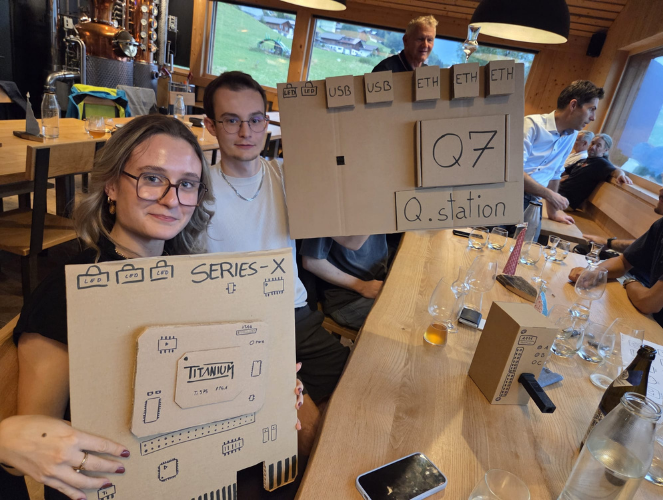
We did not expect this: a lot had already been built. Several colleagues showed prototypes that ran. Built alongside their regular work, in days rather than months.
What we take from it
What surprised us was how different the ideas were. Not their number, but the distance between them. And how much of it we can already build.
The second surprise: many ideas resembled each other. They came from different departments and pointed in the same direction.
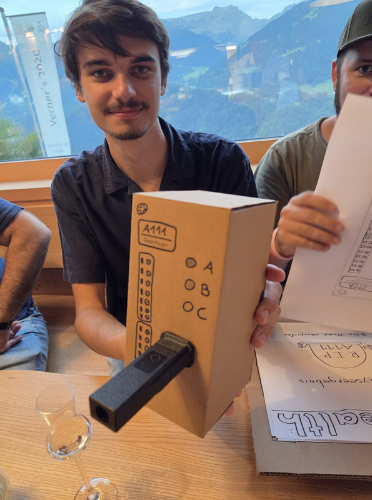
One thing is easy to name: what changed for us as an organization. When a prototype costs days instead of months, the bottleneck moves. It is no longer having ideas. It is putting them in order. An idea is only finished when a customer gets something out of it. Then the next one begins. A good idea that waits is not a rejected idea.
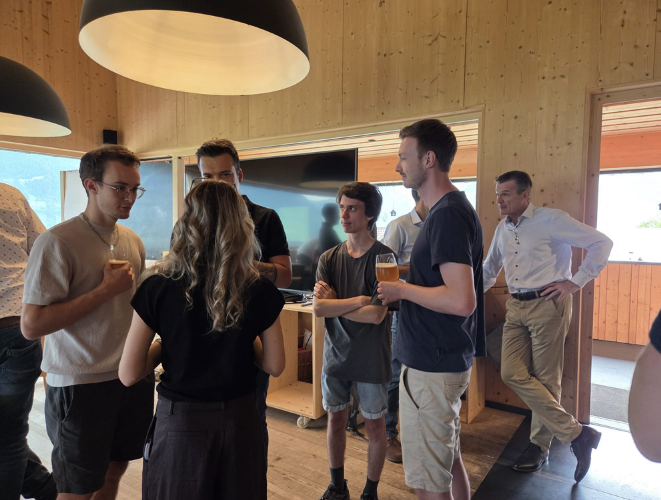
The afternoon carried on in the open kitchen, where the follow-up questions were discussed over good food and a cool glass of beer.
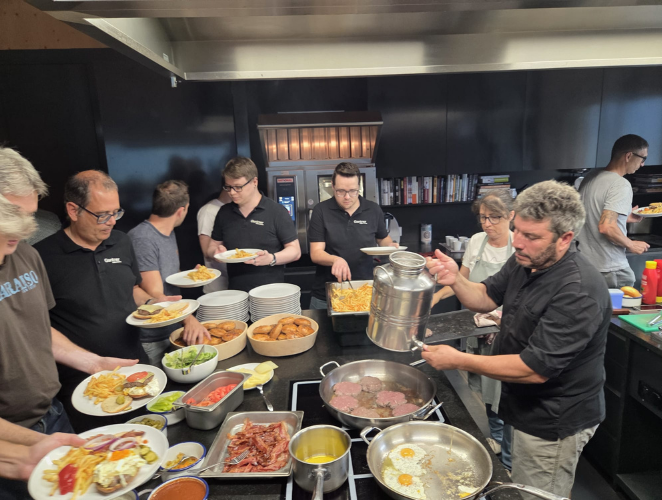
Some of what was pitched will be built. Results are coming soon. We will show them here when they are finished.
Have an idea that could change how you test? Talk to our engineers.
More articles
GI.bench Licensing on Windows 11: What the WMIC Removal Changes
If GI.bench stopped recognizing your license after a Windows update, your license is not the problem. Microsoft removed the WMIC command-line utility from Windows 11 versions 24H2 and 25H2, and older GI.bench versions rely on it to read the system information licensing needs. Updating to GI.bench 1.19.x or newer fixes it. The update is free, and your existing license carries over.
Read more...Turn your TwinCAT automation system into a high-performance Data Acquisition System
Connectivity and flexible integration of our high-accuracy and high-speed I/O modules into any automation system is in our DNA. That is why we have made our high-performance Q.series X I/O modules available for easy and comfortable integration into TwinCAT, the EtherCAT master from Beckhoff.
Read more...Sella Controls Ltd appointed as System integration partner of Gantner Instruments GmbH
Gantner Instruments GmbH is very pleased to announce that Sella Controls Ltd has been appointed as a System Integration partner for Gantner Instruments’ test, measurement and data acquisition products and solutions.
Read more...9 Vital Aspects of Bulletproof Test Cell Systems Integration
You don’t need to design a new DAQ system from scratch. Instead, you can integrate more advanced testing and technology concepts into your existing interfaces and legacy systems – sustainable and cost-effective!
Read more...