


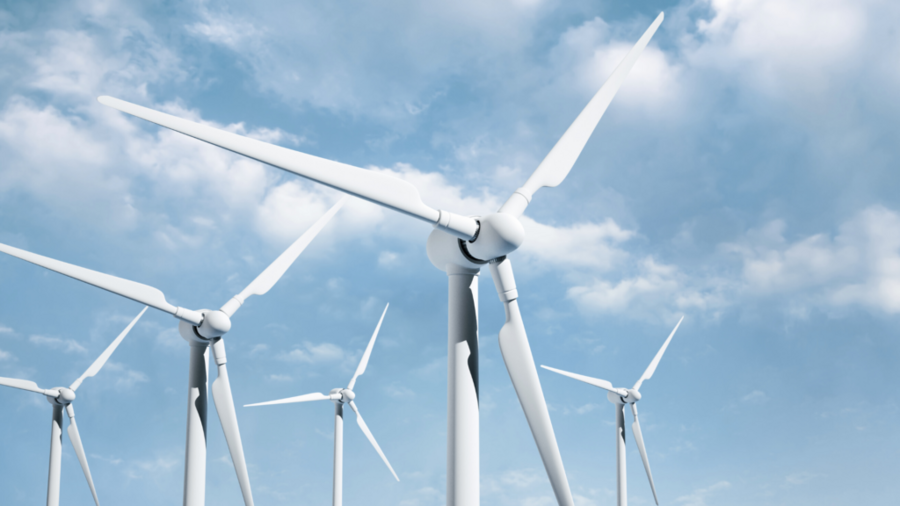
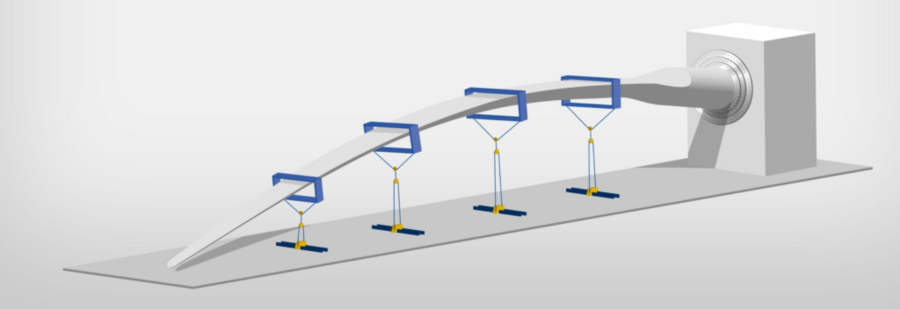
As the size of wind turbines whose blades will soon exceed the 100 m mark and generate power of up to 8 MW, the question of the material (composites) and its strength is an ongoing issue. The Danish Test Center BLAEST in Aalborg has specialized in the testing of components of wind turbines.
The test center BLAEST, owned by the leading wind technology institutes Force Technology, Technical University of Denmark (DTU – Risø) and Det Norske Veritas DNV Germanischer Lloyd – GL operates several test stands for strength and fatigue testing of rotor blades.
The prototype of each rotor blade has to be tested before approval, and series production on its strength. These tests are carried out in accordance with IEC 61400-23. BLAEST is certified for the complete test.
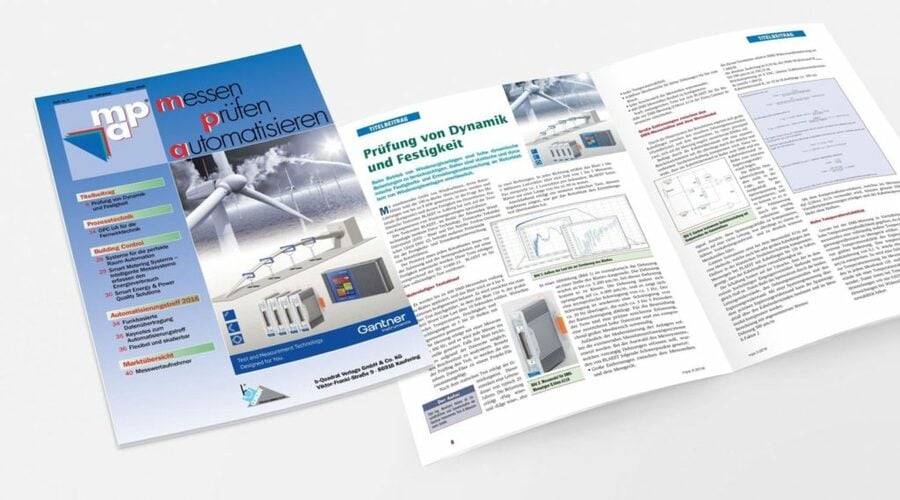
Read on this topic, our cover story in the issue 03/2016 of the journal mpa here!
More articles
Business Profitability and Edge computing
Our Gantner Instruments partner in the Philippines, DMS Engineering, organized a successful event on the 25th of November, 2022 at CEBU about using Edge Computing capabilities for Asset Monitoring to maximize business profitability.
Read more...How to transform the data avalanche into insight
In a world of increasingly complex products and faster release cycles, the ability to accumulate and efficiently analyze test data has never been more important.
Read more...SEDS Colossus Static Fire System Test Stand Unveiling
The SEDS-Students for the Exploration and Development of Space-organization at the University of California San Diego, recently held a launch gathering to unveil the final design and build of their Colossus static fire system test stand.
Read more...Strain Measurements on Flexible Pipeline Systems
NOV in Denmark tests flexible pipeline systems with the Gantner Instruments Q.bloxx modules.
Read more...