
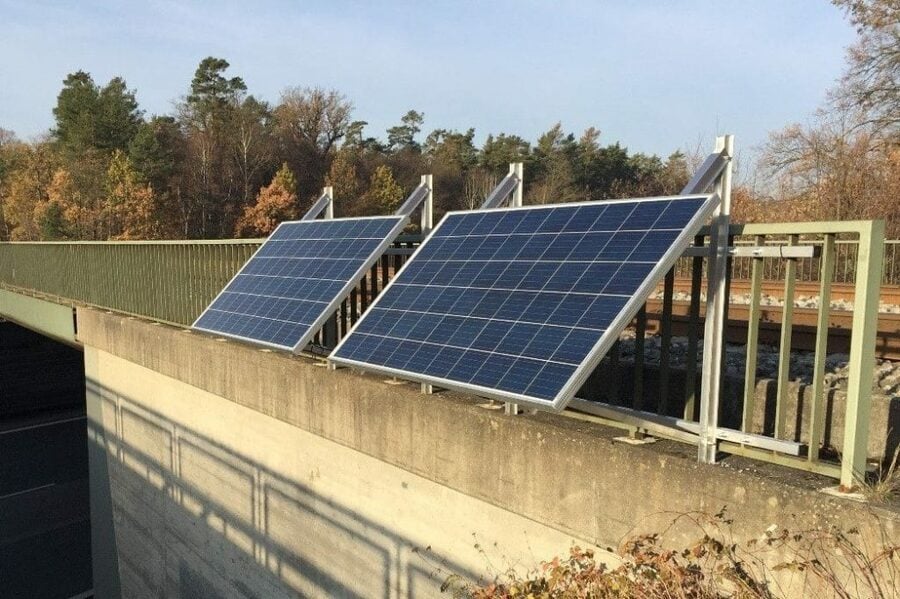
Bridge movement is measured with every passing train and data is transferred to a Gantner Cloud system via 4G modem. In the case of unwanted bridge movement, an alarm is generated and the Railway Operations Center is notified by Email. For every passing train, data is acquired at 500Hz with high resolution to ensure precise measurement of bridge movements for further evaluation.
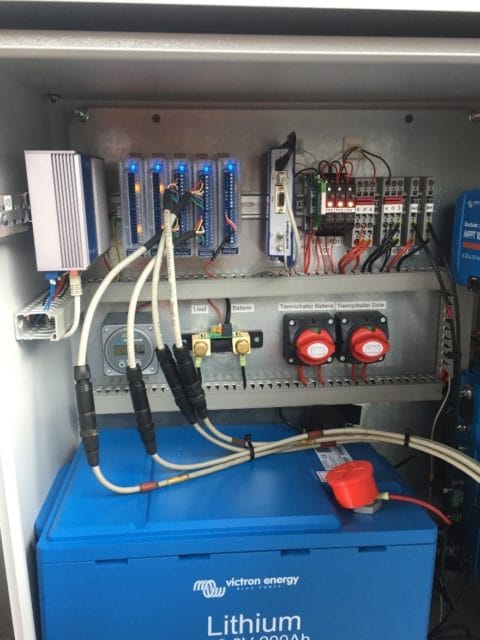
The challenge was the tight schedule to provide a solution with no possibility to power the measurement system from any local grid. In combination with the demand to generate fast and precise measurement data with every passing train, the power supply system had to be designed with great care. After analysis of the local region’s weather data from the past 5 years, two solar panels were selected along with a high-quality Lithium-Ion battery. This carefully selected combination of products guarantees several days of measurement autonomy, even under harsh environmental conditions including low temperature and solar radiation during the winter season.
The entire process from first customer interaction to the installation and commissioning of the off-grid measurement system took only 3 months. Gantner Instruments was responsible for the complete system design of the measurement cabinet as well as the simulation and design of the solar powered off-grid system. After 2 weeks of full-scale testing at Gantner Instruments’ headquarters located in Schruns, the complete measurement system was delivered on-site.
Thanks to close cooperation with the customer during all project phases, both the installation and commissioning of the complete measurement system were executed within one day. With the Gantner Cloud system now in operation, data is collected with every passing train while live measurement values and system status information is accessible for railway crew with just a few mouse clicks. With a web browser-based fleet monitoring system such as the Gantner Cloud, it is possible to manage any number of constructions, regardless if on-site grid power is available.
More articles
Transform data into insights
A monumental challenge for engineers is not just how to acquire data in testing, but how to store and preserve such large volumes of it
Read more...Gantner Instruments and i4M Technologies
Gantner Instruments and i4M Technologies (i4M) have joined forces to offer groundbreaking solutions in data acquisition.
Read more...End-of-Line Testing of Preh’s Battery Management Systems
End-of-line testing for high-voltage Battery Management Systems (BMS) is critical to ensuring performance, safety, and longevity, both for the systems themselves and the vehicles they power. As battery technologies advance, BMS testing grows increasingly complex. Discover how Preh uses Gantner Instruments' high-voltage data acquisition technology for end-of-line testing, specifically designed to meet the demands of e-mobility.
Read more...Standalone E-drive testing in 3 simple steps
Automobiles have a variety of electrically operated drives. Be it the sunroof, the window lifter, the seat adjustment or the trunk lid, everywhere you look, you’ll find electric motors that provide us comfort in our cars.
Read more...