


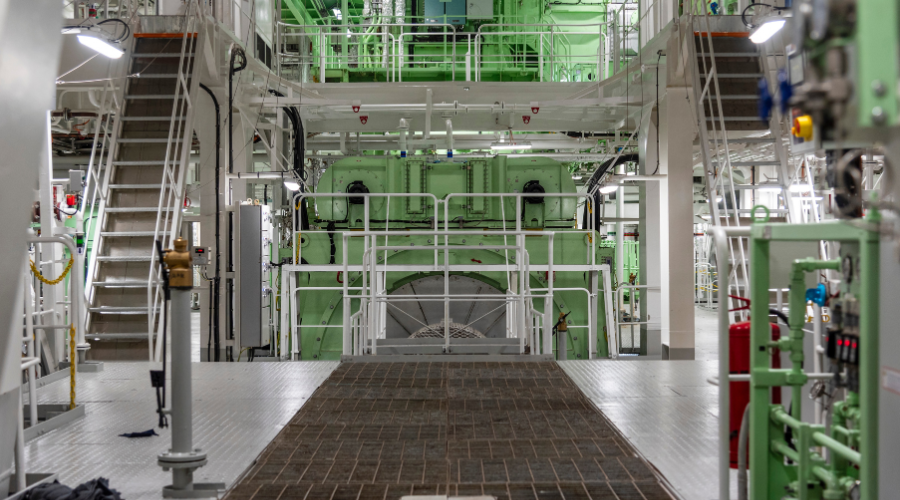
An electrified ship is a drivetrain with a hull around it. Generators, converters, a DC link, batteries, an electric motor, a shaft. The measurements that qualify it are the ones an e-drive test bench has been making for years, only at higher power, on a moving platform, and with a class surveyor reading the results.
The rulebook behind those results is short enough to state in one breath. Classification rules cap voltage distortion on the main busbar at 8 %, and on ships that rely on harmonic filters they ask for a measurement at sea once a year. Naval standards are tighter, around 5 %, and they judge the supply during a load step rather than in steady state. Everything else is engineering.
Four measurements come up every time, in the type test, on the bench, during the sea trial, and again in service. They are the same four on a battery ferry, a hybrid tug, and a naval vessel, and they are the reason a power analyzer built for electric drivetrains fits a ship without being redesigned for one.
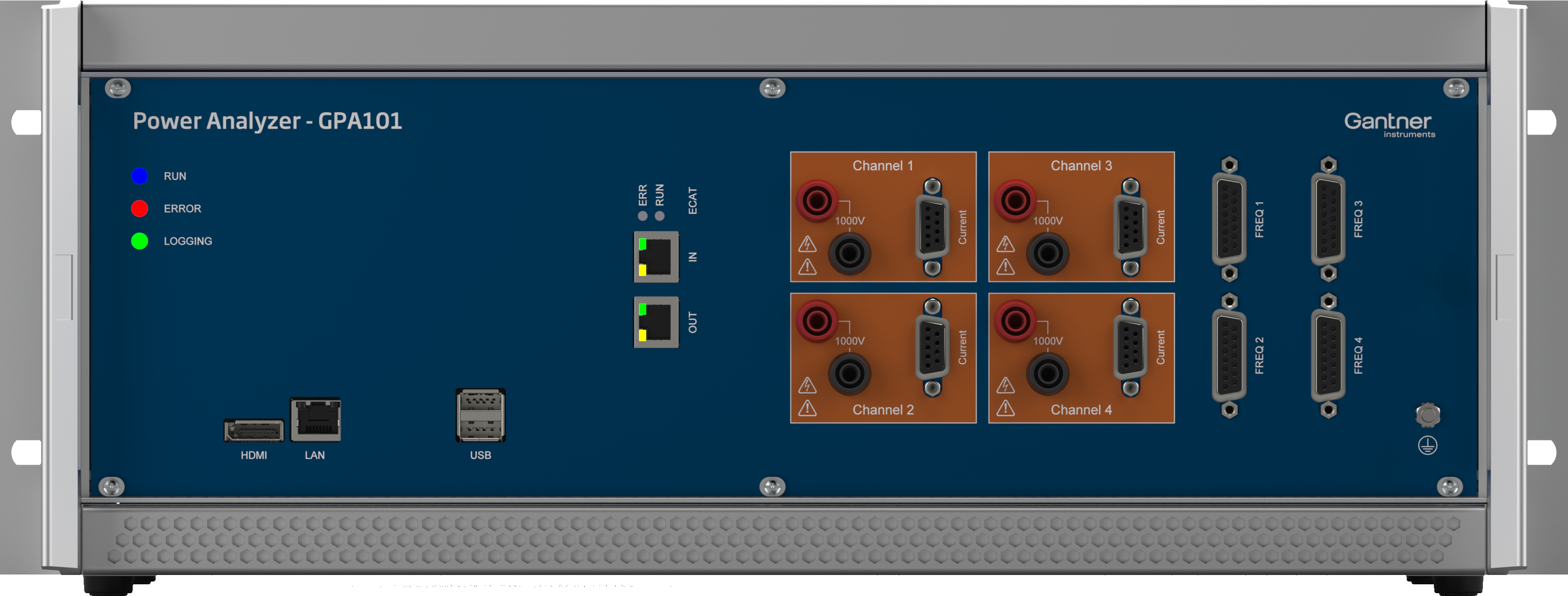
This article is about the Q.boost Power Analyzer GPA100/101, the wideband instrument: 4 MHz per channel and 1.7 MHz of bandwidth, because a busbar full of converters is not a sinusoidal system. For plants that are, a genset feeding a clean board, a PV or battery interface, there is a sinusoidal variant, the GPA110/111 SL, with 100 kS/s and continuous logging to an integrated SSD. The four measurements below are the same either way; the numbers are the GPA100/101’s.
1. Measure power quality on a busbar full of converters
A ship’s main busbar is fed by machines that switch. Every drive, every converter, every battery interface puts current back into the network that was not there before, and the sum of it is what the class rule limits.
The measurement you need is not a single number. It is RMS voltage and current, active, apparent and reactive power, power factor, and total harmonic distortion, all on the same three phases at the same moment, updated while the plant is running rather than reconstructed afterward.
Two things decide whether the distortion you measure is real. The first is bandwidth. Converter switching lives far above the fundamental, and the harmonic orders that modern rules care about, up to the hundredth on active front end drives, sit where a narrowband instrument has already rolled off. At 4 MHz per channel with 1.7 MHz of bandwidth, the switching edge itself is still in the record, not just its aftermath.
The second is the instrument’s own noise. The GPA100 inputs sit at a noise floor below −140 dB with less than 3 ppm of distortion of their own. That is the margin you want when the limit you are testing against is 8 % and the argument you may have to win is whether the distortion came from the plant or from the measurement.
2. Measure DC and AC in one pass
A DC grid puts the interesting numbers on both sides of the converter, and an efficiency figure is only worth having if both sides were captured at the same instant.
The analyzer carries four high-voltage inputs to ±1,500 V DC, galvanically isolated, and four inputs for current transducers. Measuring ranges run from ±500 mV to ±1,500 V, so the same instrument handles a shunt signal and a DC link busbar without a different front end, and every channel is isolated from every other one, which on a ship is not a comfort feature but the reason you can sit on the DC link and the three phases at the same time.
One instrument therefore sees the DC side and the AC side at once, and the efficiency of that conversion stage is a single result rather than two measurements aligned afterward.
3. Put mechanical power next to electrical power
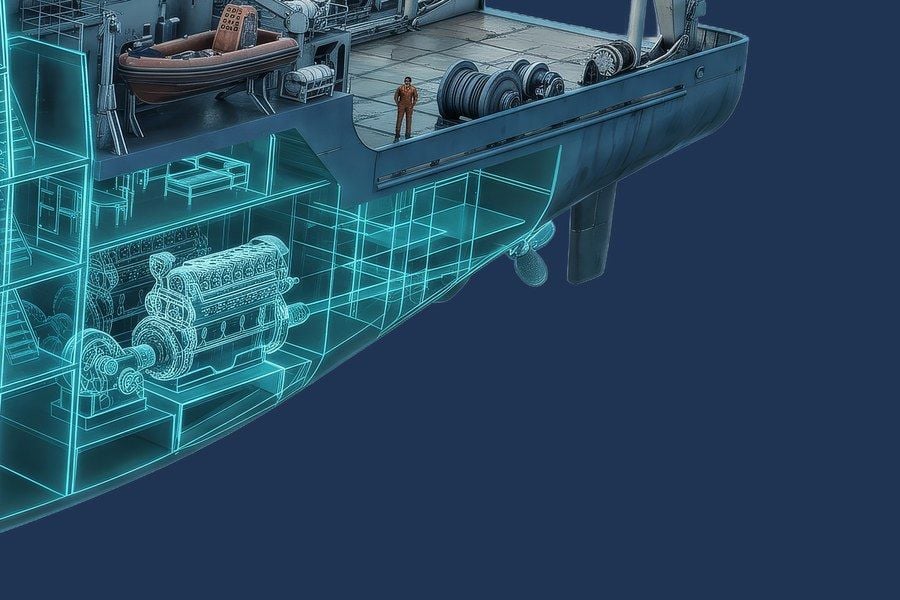
Electrical input is half the answer. What the owner pays for is thrust, and what the class rule on converter-fed motors asks about is the efficiency of the machine between the two.
The GPA carries four frequency and counter inputs: two for torque sensors with a frequency output, two counter inputs for speed sensors, resolving from 0.1 Hz to 1 MHz at 0.01 % accuracy, including direction of rotation. On the GPA101 a resolver option reads the motor’s built-in resolver as well. Mechanical power is calculated directly, in the same device, from the same acquisition, not merged later from a second system with its own timestamps. Shaft power, electrical power, and the efficiency between them come out as one record.
That record is what makes a sea trial comparable to a bench run. The vessel changes; the measurement does not.
4. Fit the analyzer into the bench you already have
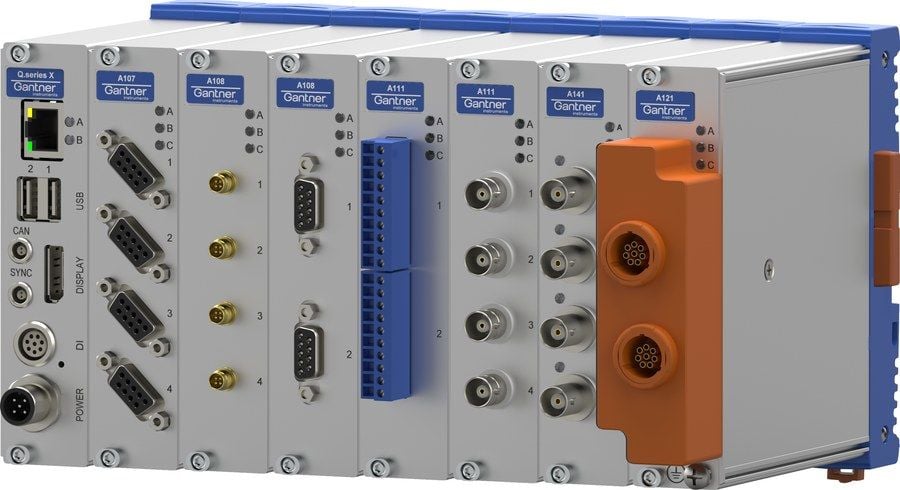
A measurement no one can reach is not a measurement. Results and raw values leave the GPA over EtherCAT and TCP/IP, so the analyzer becomes a node in the test bench rather than a second island beside it.
The software side is deliberately unexciting. GI.bench runs on Windows and Linux. A Q.station HP with 32 GB of RAM and a 1 TB SSD logs the run when nobody is watching the screen. MATLAB, LabVIEW, OPC UA, MQTT, CAN and an open API are the ways the data gets out, and the instrument mounts either in a 19” rack at 4U or portable in a Q.brixx housing. The bench version and the sea-trial version are the same instrument in a different box.
That matters for one specific thing. A naval load-step assessment has to show recovery within ±16 % in 2 seconds. That is a raw-data question. An averaged value cannot answer it, and a system that only exports results has already thrown away the evidence.
Same four measurements, one instrument
These four measurements did not come from the marine industry. They come from electric vehicle and e-drive testing, where the same converters, the same DC links and the same efficiency questions arrived a decade earlier, and where the Q.boost Power Analyzer was built. Ships raised the power and added salt water; the measurement task stayed where it was.
The practical consequence is unglamorous and worth having: run the bench and the trial on one instrument, and you compare numbers instead of comparing methods.
Looking at the data chain rather than the power measurement? See the companion article, Keep the Ship Measurable.
More articles
Test Measurement DAQ for SEDS sponsored by Gantner Instruments
Gantner Instruments, Inc. is proud to be a platinum sponsor of the SEDS-Students for the Exploration and Development of Space-organization at the University of California San Diego. Gantner Instruments provided the data acquisition system required for their Colossus Static Fire System Test Stand. This full test system is complete with Gantner’s Q.station PLC controller, precision DAQ modules for TC, Voltage, Current, Resistance and Pt100.
Read more...Introducing License Flexibility: GI.bench’s Latest Update Adds Dongle Support
We are excited to announce the newest enhancement to GI.bench. With the introduction of License-Dongle support and several minor improvements, GI.bench continues to evolve with functionality that anticipates and meets the evolving needs of professionals in the field.
Read more...6 Tips for Stress-free Strain Measurement during Fatigue Testing of Aircraft Structures
Strain is the single most important measurement during aircraft fatigue testing. The accuracy and precision of strain gauge measurements is of the greatest importance to exactly determine the durability and damage tolerance of a structure. The higher a structure is in the ‘pyramid of test’, the higher the test complexity, number of measurement channels, and data produced. On top of that the risk in terms of time delay and cost associated to a test program increases more than proportional with the increase in test complexity. Here are six tips to help you choose the right data acquisition system for your fatigue test:
Read more...Battery Cell Testing in the Automotive Industry
The automotive industry is undergoing a transformative shift toward electric vehicles (EVs), making battery technology a central focus for innovation. As consumer demand for EVs grows, reliable battery performance and safety have become more critical than ever. At the heart of guaranteeing reliability is thorough, methodical battery cell testing. Below, we explore why cell testing is so vital, how it’s done, and the key challenges in today’s market.
Read more...