
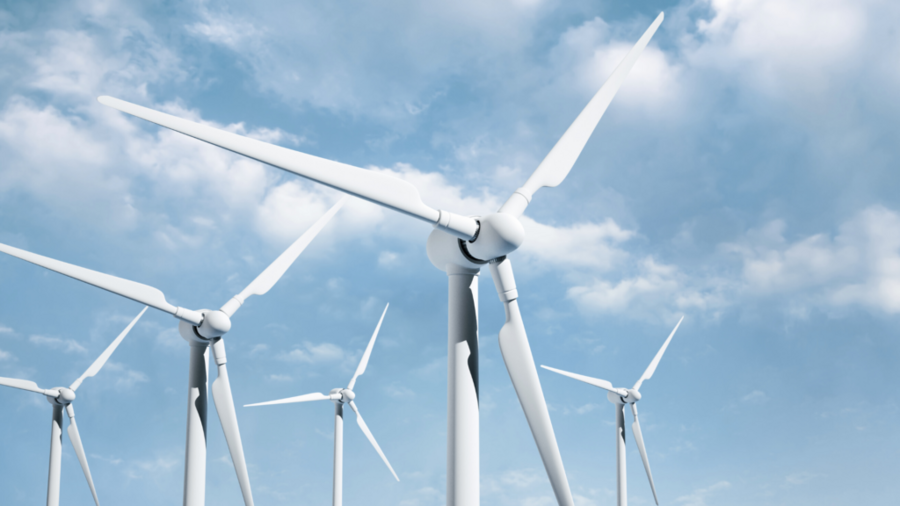
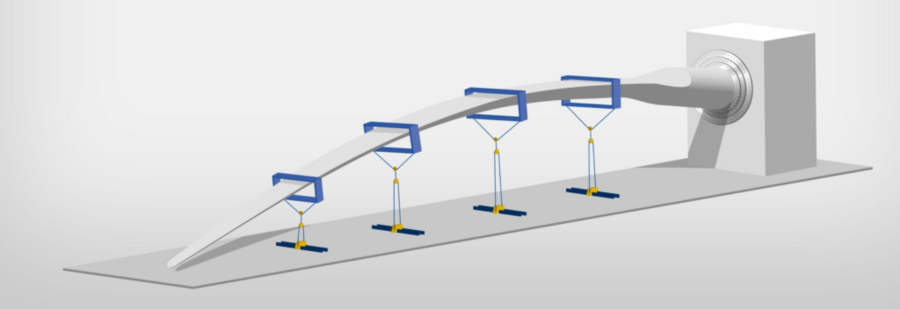
As the size of wind turbines whose blades will soon exceed the 100 m mark and generate power of up to 8 MW, the question of the material (composites) and its strength is an ongoing issue. The Danish Test Center BLAEST in Aalborg has specialized in the testing of components of wind turbines.
The test center BLAEST, owned by the leading wind technology institutes Force Technology, Technical University of Denmark (DTU – Risø) and Det Norske Veritas DNV Germanischer Lloyd – GL operates several test stands for strength and fatigue testing of rotor blades.
The prototype of each rotor blade has to be tested before approval, and series production on its strength. These tests are carried out in accordance with IEC 61400-23. BLAEST is certified for the complete test.
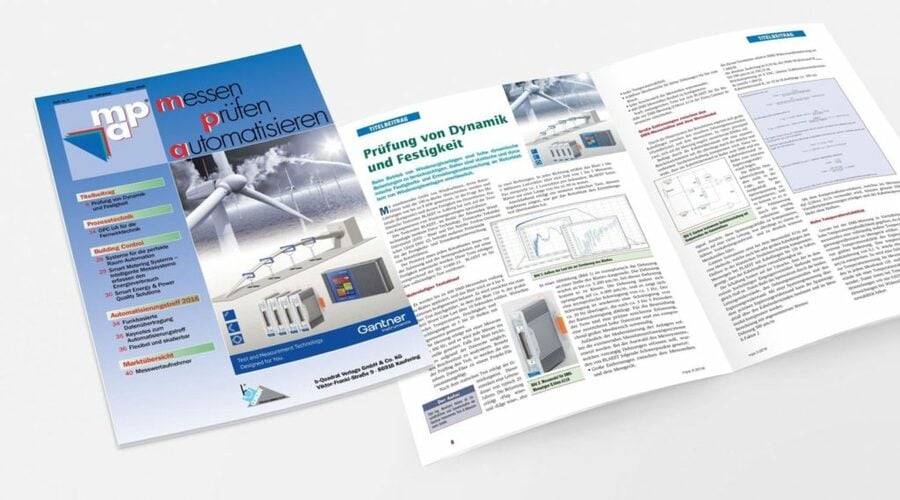
Read on this topic, our cover story in the issue 03/2016 of the journal mpa here!
More articles
ICCC iCampus Cottbus Conference
Save the Date: iCampus Cottbus Conference (iCCC 2026), May 5–7 at the Radisson Blu Conference Hotel Cottbus!
Read more...Q.series X A156
New 4-channel carrier frequency amplifier for inductive transducers and strain gages
Read more...The Smarter E Europe
Join us at The Smarter E Europe in hall B5, stand no. 320. Our experts, Jörg Scholz and Jürgen Sutterlüti will be present and ready to address your questions.
Read more...Automotive Test Automation
With an increasing pressure to reduce CO2 emissions, E-mobility is a fast-growing market. While keeping this in mind, Gantner Instruments successful Q.series product line offers the best performance with maximum flexibility, to meet the growing demand for E-Mobility Battery Testing and Battery Management Systems.
Read more...