
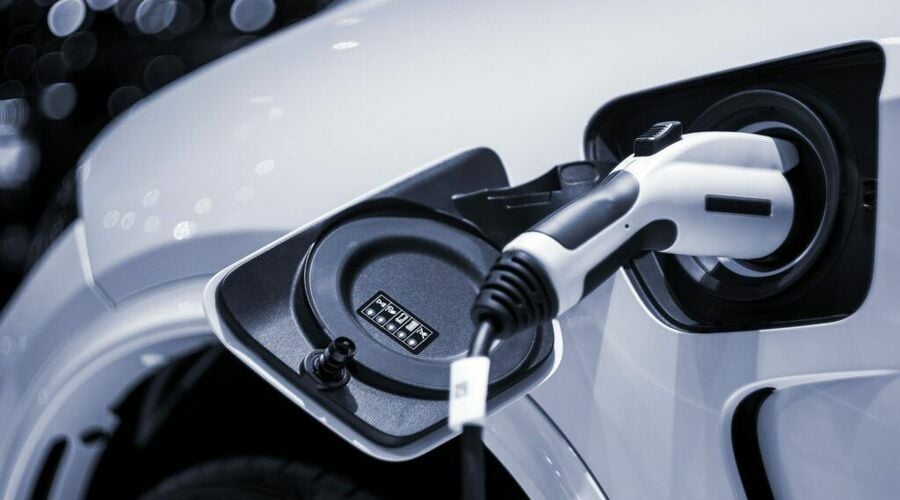
The universal measuring module Q.series A121 is designed for measurements of voltage, current, Pt100 sensors, NTC resistors, IEPE sensors as well as strain gauge half and quarter bridges. This means that in addition to the typical charging and discharging tests, the shock, vibration and stress tests can also be carried out successfully.
The module has 2 galvanically isolated inputs, which are isolated to each other, to the voltage supply and the interface with an isolation voltage of 1200 VDC. A measuring rate of 100 kHz per channel is very suitable for recording signals in case of shock test without signal losses.
The high-voltage modules of the Q.series can be combined with all Q.series modules and controllers. They are preferred by many system integrators and are already successfully used by many users.
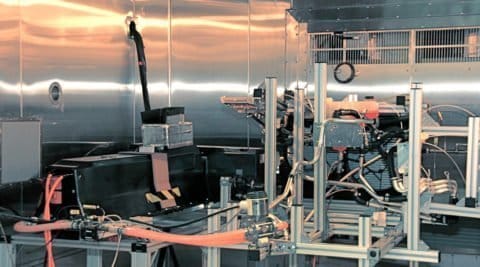
For example, Daimler AG, Deutsche Accumotive, VOLVO Cars, Renault Battery Lab, General Motors Battery Lab, Schaeffler Group, ZF Friedrichshafen and Bosch Battery Solutions. But also testing institutes such as TUEV Sued relies on the products of Gantner Instruments.
More articles
Transform data into insights
A monumental challenge for engineers is not just how to acquire data in testing, but how to store and preserve such large volumes of it
Read more...Gantner Instruments Sponsors STEM Education
The world is changing around us. Advances in technology impact everything, especially the world of work. It’s predicted that future workers will spend more than twice as much time on job tasks requiring science, math, and critical thinking than today. At Gantner Instruments, we recognize the importance of STEM education: it holds the keys to success for kids facing a world where STEM knowledge is imperative. For that reason, we are proud to be a Platinum Sponsor of Students for the Exploration and Development of Space at the University of California, San Diego (SEDS UCSD).
Read more...Gantner Instruments presents cryogenic measurement solution at Space Tech Expo
From October 24 -26 the Space Tech Expo and Conference took place in Bremen, Germany. The Space Tech is Europe’s meeting place for space business, Technology and innovation.
Read more...Strain Measurements on Flexible Pipeline Systems
NOV in Denmark tests flexible pipeline systems with the Gantner Instruments Q.bloxx modules.
Read more...