



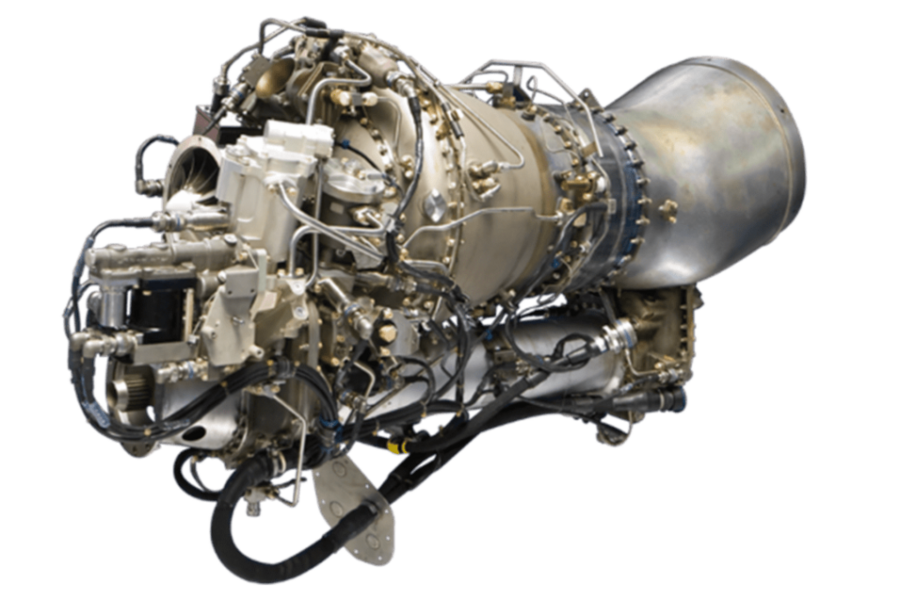
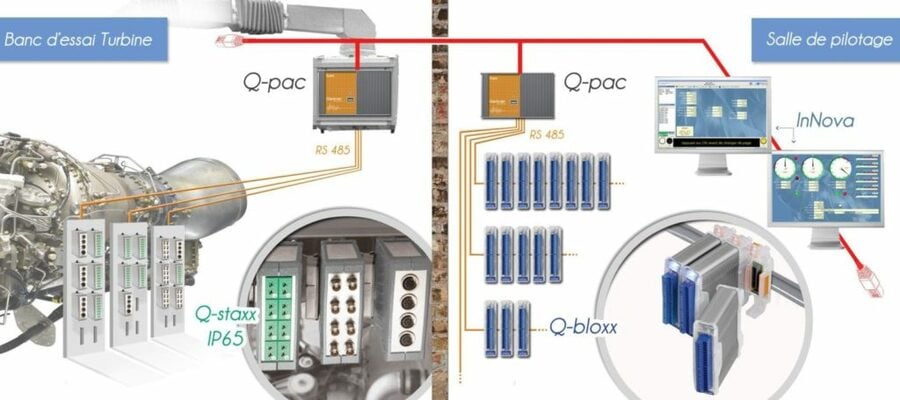
All turbines are tested for their mechanical and thermodynamic behavior.
The main requirements for this type of testing are:
- Acquisition of hundreds of measurement channels in the kHz range
- Galvanic isolation up to 1200 V
- Signal Conditioning
- Robustness and modularity
- Synchronized recording of all channels
- Measurement system can be synchronized to an external time reference
(NTP or IRIG)
More articles
GI.training in June 2026
We will be in Lauf an der Pegnitz for the GI.basic training on June 17, and for the GI.professional training on June 18, 2026.
Read more...High Performance Measuring Module D107 for Frequencies
The Q.bloxx D107 is a new measurement module for the acquisition of frequencies and incremental signals. Due to its fast signal conditioning capability with a clock speed of 288 MHz, the new module is suitable for extreme measurement of rotational speeds, which were not previously possible in this price range.
Read more...6 Tips for Stress-free Strain Measurement during Fatigue Testing of Aircraft Structures
Strain is the single most important measurement during aircraft fatigue testing. The accuracy and precision of strain gauge measurements is of the greatest importance to exactly determine the durability and damage tolerance of a structure. The higher a structure is in the ‘pyramid of test’, the higher the test complexity, number of measurement channels, and data produced. On top of that the risk in terms of time delay and cost associated to a test program increases more than proportional with the increase in test complexity. Here are six tips to help you choose the right data acquisition system for your fatigue test:
Read more...The Story Behind GI.blop: A home-brewed NEIPA Christmas treat from Austria
Christmas is approaching, and with it comes the festive season of sharing and special gestures. This year, we at Gantner Instruments wanted to give our customers and partners something unique for the holidays. So we created a special handcrafted beer we call GI.blop that is not only a great gift but also tells a story.
Read more...