


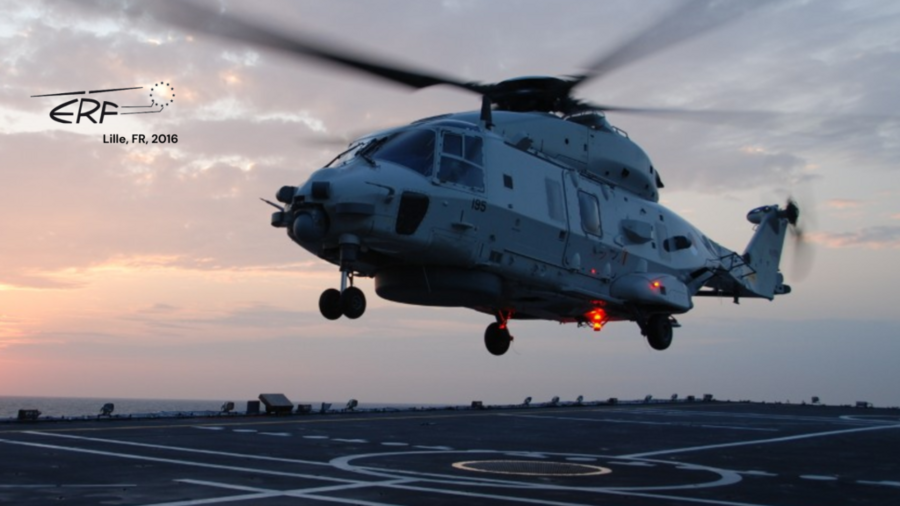
During the 3-day event Gantner had the opportunity to showcase its measurement capabilities for -amongst others- helicopter component fatigue testing and turbine engine durability testing. Participants could witness a live demonstration of Gantner’s Q.series modules for strain, temperature and vibration measurement. Other participants included industry leading companies like Airbus Helicopters, Leonardo Helicopters, Safran Helicopter Engines, DLR, and Onera.
Recently, both Airbus Helicopters and Safran Helicopter Engines have selected the Q.series for their test labs. Airbus has selected the Q.series EC with EtherCAT interface as the total control and measurement solution of choice for their entire components structural testing lab. Safran has accredited the Q.series for all their engine development and production test benches.
More articles
New Monitoring Solution – Q.series Portable
For short-term or rout-based condition monitoring of various assets we now provide a portable system solution. Our new Q.series Portable based on Q.station 101 and OEM-boards for analog and digital inputs contained in a robust transport case is fully engineered and ready to use ‘out of the box’. The electronic boards and the power supply system are mounted on shock absorbers to withstand heavy-duty work under harsh environments in the field.
Read more...PV & Grid Integration Symposium
Meet us at the 2019 PV Systems Symposium, the leading industry get together for PV Monitoring and grid integration in Albuquerque (New Mexico), United States.
Read more...16th Aviation Forum 2026
Join us at Europe's leading aerospace conference and exhibition, where OEMs, suppliers, and industry leaders come together to shape the future of aviation.
Read more...CSME–CFDSC–CSR 2026 International Congress
Engineering innovation across mechanics, CFD, and rheology
Read more...