



Testing of the world’s longest wind turbine blade
The LM 88.4 P test blade arrived at BLAEST on 1st July, 2016, after being transported from LM Wind Power’s Pilot Plant in Lunderskov. In four weeks the static test was successfully completed.
The LM 88.4 P demonstrated that it can withstand extremely high winds. In the next few months a fatigue test involving the shaking the blade up and down several million times was conducted to determine the durability, longevity, and the ability to survive 25 years of offshore operation.
For the rest of 2016, two LM 88.4 P blades will be tested simultaneously: one at LM Wind Power’s Lunderskov Test Centre, and one at the BLAEST test facility. The parallel testing program will provide results over a 7-month duration – to ensure that the blade meets its design requirements, in half the time normally required for testing.
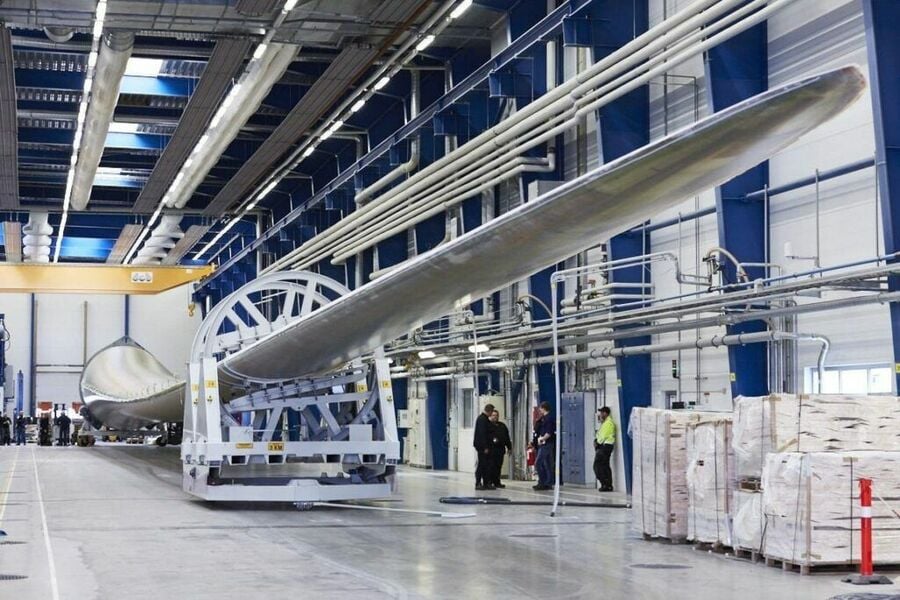
The BLAEST test centre is co-owned by the leading wind technology institutes Force Technology, Technical University of Denmark (DTU – Risø) and Det Norske Veritas DNV Germanischer Lloyd. BLAEST operates several test stands for testing the strength and fatigue of wind turbine blades.
BLAEST Test Centre has been using Gantner Instruments strain gauge technology for several years. Several systems with up to 100 channels per measuring setup record the strain signals dynamically, synchronously and precisely. The modules Q.bloxx A116 and the test controller Q.station were used.
Testing is performed in cooperation with our Danish partner IPC Teknik ApS.
More articles
CSME–CFDSC–CSR 2026 International Congress
Engineering innovation across mechanics, CFD, and rheology
Read more...Fuel Cells: Advanced Measurement Techniques and Navigating the Hydrogen Market
The energy landscape is in a state of flux, shifting towards sustainable practices, and fuel cells have risen as a promising beacon of renewable energy. The mastery of fuel cells, their inner workings, and the nuances of their measurement, is central to this paradigm shift towards green energy. These devices, which are essentially electrochemical cells that transform chemical energy into electricity, promise a more sustainable, carbon-neutral future, provided we can harness their full potential. This blog post delves into the captivating scientific universe of fuel cell measurement, elaborating on the methodologies, complexities, challenges, and breakthroughs that make fuel cell technology so intriguing.
Read more...How to transform the data avalanche into insight
In a world of increasingly complex products and faster release cycles, the ability to accumulate and efficiently analyze test data has never been more important.
Read more...PV & Grid Integration Symposium
Meet us at the 2019 PV Systems Symposium, the leading industry get together for PV Monitoring and grid integration in Albuquerque (New Mexico), United States.
Read more...