

SEDS UCSD is a team of highly motivated, passionate students focusing on propulsion development, rocketry design, in-space robotics, and CubeSat hardware. The SEDS UCSD team acknowledges NASA’s focus on safety and makes every effort to incorporate NASA’s operating procedures into their design and daily operations.
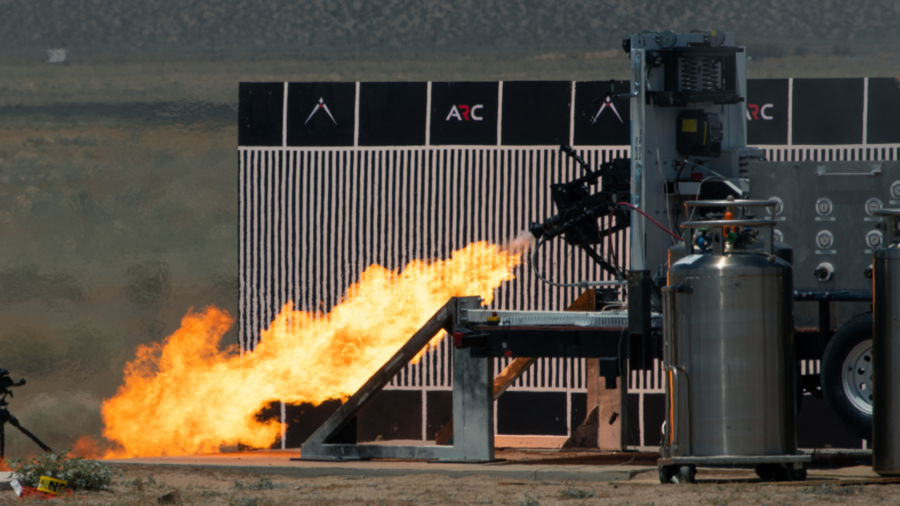
Over the last few years, a team of entirely undergraduate college students has been working on the Colossus Static Fire System. The compilation of this bi-propellant liquid rocket engine test stand provides a long-lasting hot fire capability for the SEDS UCSD program. Colossus is established as a technical development project utilizing proven designs and hardware to create a foundation for future projects and test programs. The system will be used to attain performance parameters of liquid rocket engines.
Future iterations and engine designs can progress armed with a critical mass of data and Gantner Instruments’ support. Colossus has an extensive network of sensors deployed around the system. These sensors provide the students with real-time temperature, pressure, and force data from various test stand components. Gantner Instruments provided the students at SEDS UCSD with a reliable and high-fidelity Q.series data acquisition system to acquire quality data from these sensors. The Q.series DAQ system’s superior flexibility allows the students to program automated responses to errors and actuates the fire safety valves to prevent system failures.
We at Gantner Instruments are proud of the accomplishments of SEDS UCSD and continue to look forward to the progress made by this innovative student organization!
More articles
Wendelstein 7-X Stellarator
After 9 years in construction, the stellarator (nuclear-fusion machine) of the Max Planck Institute in Greifswald generated plasma for the first time on December 10, 2015. The reactor had been gradually ramped up over the past 12 months. The event was given extensive coverage in the media. Gantner Instruments specially developed sensors for temperature and strain measurement for the project, which are otherwise unavailable on the market.
Read more...Bridge Excitation and Measuring Range with Strain Gauge
Strain gauge bridges provide signals that depends on bridge excitation. Therefor the bridge signal is expressed in mV/V (ratiometric measurement).
Read more...SEDS Colossus Static Fire System Test Stand Unveiling
The SEDS-Students for the Exploration and Development of Space-organization at the University of California San Diego, recently held a launch gathering to unveil the final design and build of their Colossus static fire system test stand.
Read more...Three steps to the Internet of Things (IoT) or: Where is analog big data derived from?
The break-up into the new era of Internet of Things (IoT), industry 4.0 or cloud computing takes an impressive pace and is also in several industrial applications irresistible. The industry with its huge amount of machines and components of divers size, value and function is faced by one big challenge: data from all these assets needs to be gathered and analyzed.
Read more...