


Our advanced 4-channel Q.bloxx A105 measurement module sets new standards in terms of stability and precision. For many different applications, the extremely precise and stable measurement of temperatures is an absolute prerequisite for the control of processes or the success of product innovations. In addition to the essential precision, particularly important aspects of this are the maintenance of stability when changes occur in the ambient temperature and ensuring long-term stability.
Key Features:
- 4 galvanic isolated input channels for cryogenic sensors
e.g. Type Cernox, Type TVO
input range selectable 6500 Ω and 20000 Ω - Sensor excitation 7.5 µAeff only
avoids self-heading of the sensor - Individual linearization of the sensor characteristics
Sensor specific linearization by using 32 nodes and archive in a sensor data file. Import of manufacturers calibration data - High accuracy digitalization
24 bit ADC, 10 Hz sample rate per channel
More articles
High-Accuracy, EHV Battery Temperature Measurement DAQ: GM Application Note
Gantner Universal Test & Measurement DAQ Systems with Precise Temperature Measurement, Distributed I/O, and Signal Conditioning, Selected for GM (Chevy Volt) Battery Testing.
Read more...Q.series interface with the Moog Aerospace Test Controller
The amount of data generated in an aircraft structural test program continues to grow. The density of load introduction points (actuators) and sensors (strain gauges, thermocouples, LVDTs) on a test article is increasing progressively and model validation requires higher data sample rates to capture more detail. The risks and costs involved in aircraft validation and certification are significant, and the requirement for quick entry-into-service is high. To minimize the impact of retrofitting in-service aircrafts, the ability to generate test results quickly is crucial to the success of a test program.
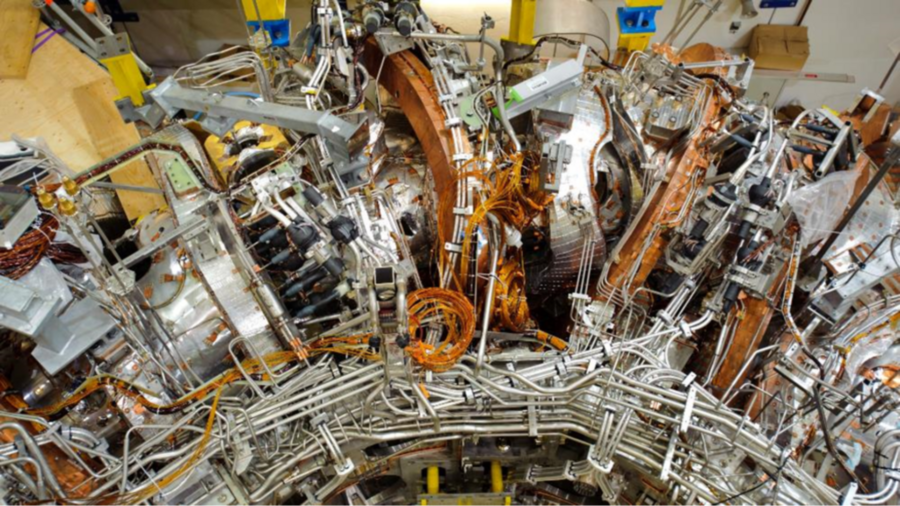
Read more...Wendelstein 7-X Stellarator
After 9 years in construction, the stellarator (nuclear-fusion machine) of the Max Planck Institute in Greifswald generated plasma for the first time on December 10, 2015. The reactor had been gradually ramped up over the past 12 months. The event was given extensive coverage in the media. Gantner Instruments specially developed sensors for temperature and strain measurement for the project, which are otherwise unavailable on the market.
Read more...IPERMON – Innovative Performance Monitoring System for Improved Reliability and Optimized Levelized Cost of Electricity
Currently, a vast amount of research institutions and organizations are focusing on ways to improve the operation, reliability and consequently the output of PV systems. An important aspect yet to be targeted remains the procedural and standardized approach to calculate accurately the factors behind the various performance loss mechanisms, while also detecting and diagnosing potential failures at early stages or before occurrence. Identification of degradation and failure modes at preliminary stages is important as these mechanisms directly influence the performance, lifetime and reliability of PV technology.
Read more...