
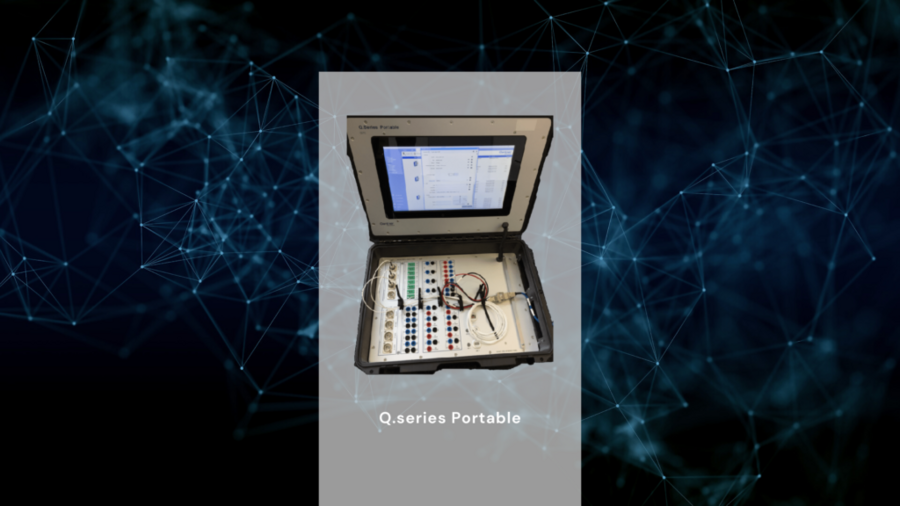
The Q.series Portable is available in two versions:
- Q.series Portable – Standard with up to 32 user defined channels
- Q.series Portable – Extended with up to 64 user defined channels and inbuild touch Display
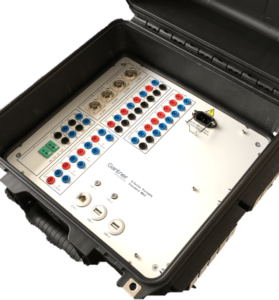
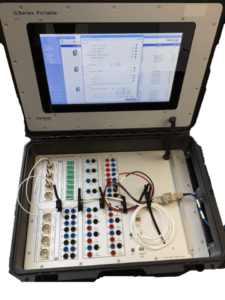
Both versions have inbuild storage device extendable with USB drives and can be extended by further modules e.g. Q.staxx on two UARTS. With customized plugs and sockets for sensor connection and inbuild sensor excitation for example for MEMS sensors the system is ready to use after very short installation time. With special cable entries sensor cables with installed plugs can be inserted into the transport case while providing an IP protection grade of IP54 / IP63 (depending on type of cable entry).
The Q.series Portable can be installed close to a machine, equipment, plant, etc. or extended across a large area with daisy chained additional modules. Connectable and networkable by Ethernet to other Gantner DAQ systems or remote computers for data visualization, data can be internally logged with inbuild storage or accessible USB drive ports. With the OPC UA interface of the Q.station also an online connection to SCADA systems is possible. 4G/LTE Modem for automated data transfer to customer host or GI.cloud can be ordered as an option.
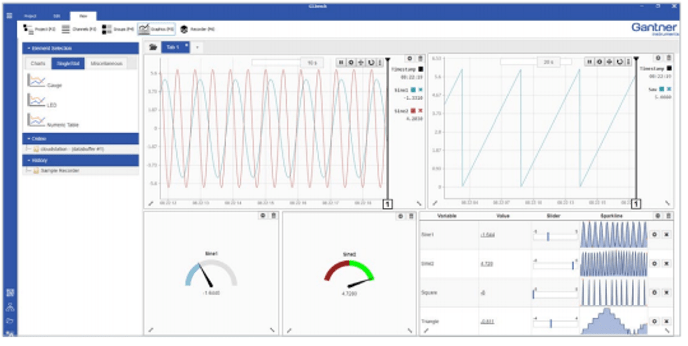
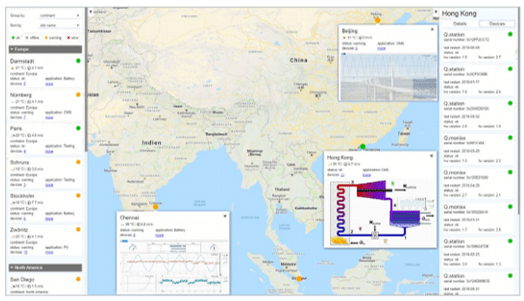
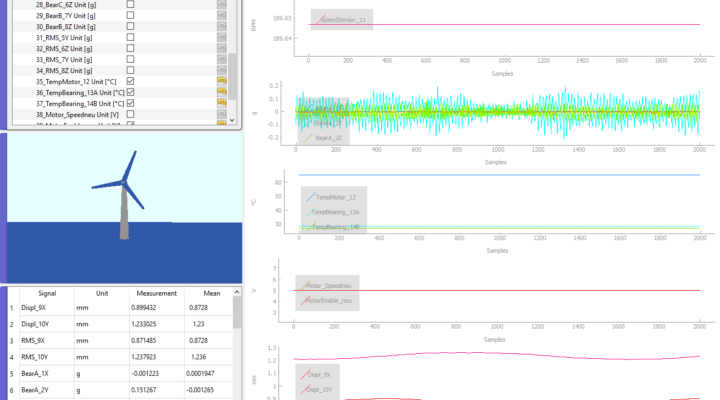
With the different interfaces you have the choice to use it as a stand-alone data logger or visualize the live data on GI.bench, GI.cloud or with a customized user interface made with Python.
For more information about the Q.series Portable you can check out the flyer:

More articles
GDevCon 4 Glasgow
Immerse yourself in the vibrant world of graphical programming at GDevCon 2023 on the 20th and 21st of September, from 9:00 am - 6:00 pm, at the esteemed Glasgow Science Centre, Scotland. This conference is a must-attend event for anyone striving to push the boundaries in the fields of engineering and technology.
Read more...Python Integration – A New Level of Automation and Analysis
Engineering teams rely on powerful, customizable tools to handle increasingly complex test scenarios. GI.bench now includes integrated Python scripting, empowering engineers to automate measurement workflows, perform advanced real-time analyses, and seamlessly integrate with external software. This feature leverages Python's rich ecosystem, ensuring flexibility and efficiency in test and measurement projects.
Read more...Designing SHM as Long-Term Measurement Infrastructure
Across the United States, bridges, tunnels, dams, and large industrial structures are being pushed beyond their original design life and asked to carry higher traffic volumes, heavier freight, and more frequent extreme events. At the same time, the U.S. regulatory and asset-management environment still depends heavily on periodic inspection programs and documented condition data.
Read more...Fuel Cells: Advanced Measurement Techniques and Navigating the Hydrogen Market
The energy landscape is in a state of flux, shifting towards sustainable practices, and fuel cells have risen as a promising beacon of renewable energy. The mastery of fuel cells, their inner workings, and the nuances of their measurement, is central to this paradigm shift towards green energy. These devices, which are essentially electrochemical cells that transform chemical energy into electricity, promise a more sustainable, carbon-neutral future, provided we can harness their full potential. This blog post delves into the captivating scientific universe of fuel cell measurement, elaborating on the methodologies, complexities, challenges, and breakthroughs that make fuel cell technology so intriguing.
Read more...