
NOV (National Oilwell Vacro) is a global company in the fields of drilling and conveying technology. NOV supports the world’s most advanced drilling solutions in the oil and gas industry.
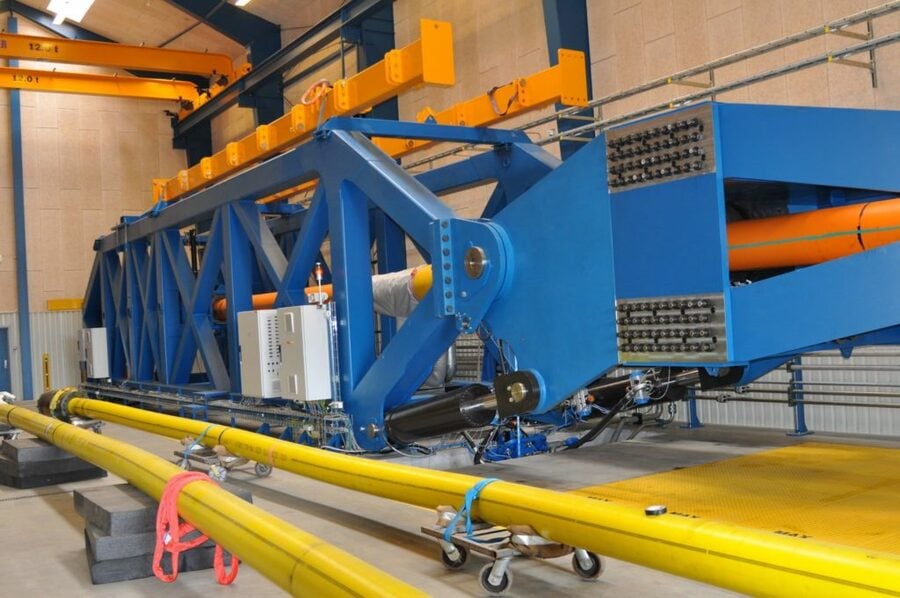
Here almost 150 measuring channels are used in a test system:
- 10 x IEPE with 5 x Q.bloxx A101
- 24 x current with 3 x Q.bloxx A108
- 12 x Pt100 with 3 x Q.bloxx A107
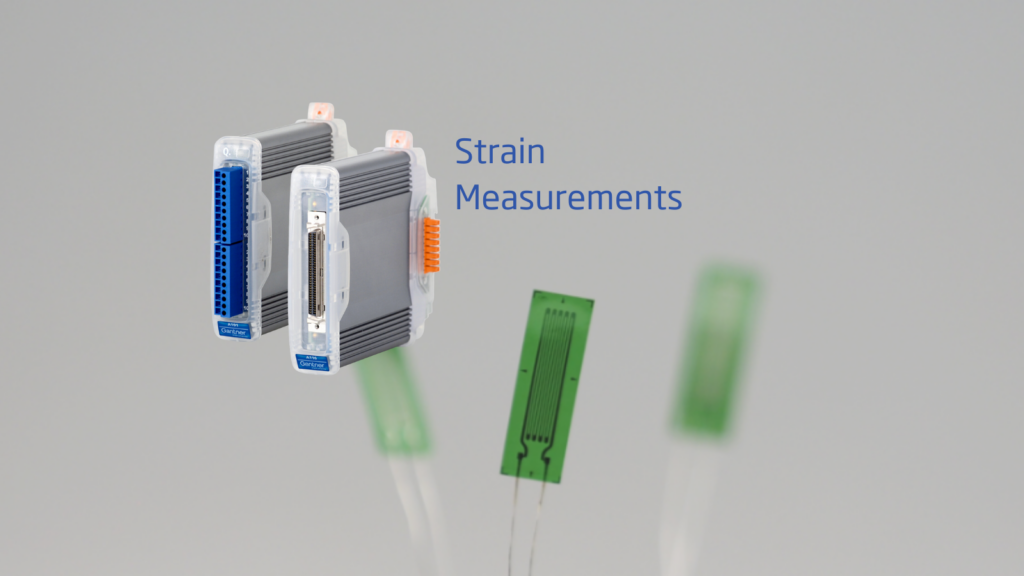
- 96 x SG with 12 x Q.bloxx A116
- Multiple digital I/Os
The measured data is recorded at a sample rate of 10 kHz. A data logger was configured in the Q.station test controller that records the conditioned and raw data. The recorded data is transferred to a SQL database using the test.node server software.
At present, four test systems are being built; with additional systems being planned. Testing is performed in cooperation with our Danish partner IPC Teknik ApS.
More articles
Q.series interface with the Moog Aerospace Test Controller
The amount of data generated in an aircraft structural test program continues to grow. The density of load introduction points (actuators) and sensors (strain gauges, thermocouples, LVDTs) on a test article is increasing progressively and model validation requires higher data sample rates to capture more detail. The risks and costs involved in aircraft validation and certification are significant, and the requirement for quick entry-into-service is high. To minimize the impact of retrofitting in-service aircrafts, the ability to generate test results quickly is crucial to the success of a test program.
Read more...Changing demands within Automotive Testing – Webinar
Want to know more about changing demands within Automotive Testing?
Read more...Wendelstein 7-X Stellarator
After 9 years in construction, the stellarator (nuclear-fusion machine) of the Max Planck Institute in Greifswald generated plasma for the first time on December 10, 2015. The reactor had been gradually ramped up over the past 12 months. The event was given extensive coverage in the media. Gantner Instruments specially developed sensors for temperature and strain measurement for the project, which are otherwise unavailable on the market.
Read more...25th International Colloquium Tribology 2026
The 25th International Colloquium Tribology takes place January 27–29, 2026, at TAE Esslingen, Germany. This special anniversary edition is held under the theme “Bridging Science and Industry – Driving a Sustainable Future with Tribology” and brings together international experts from research and industry for three days of knowledge exchange and networking.
Read more...