


SEDS UCSD is a team of highly motivated, passionate students focusing on propulsion development, rocketry design, in-space robotics, and CubeSat hardware. The SEDS UCSD team acknowledges NASA’s focus on safety and makes every effort to incorporate NASA’s operating procedures into their design and daily operations.
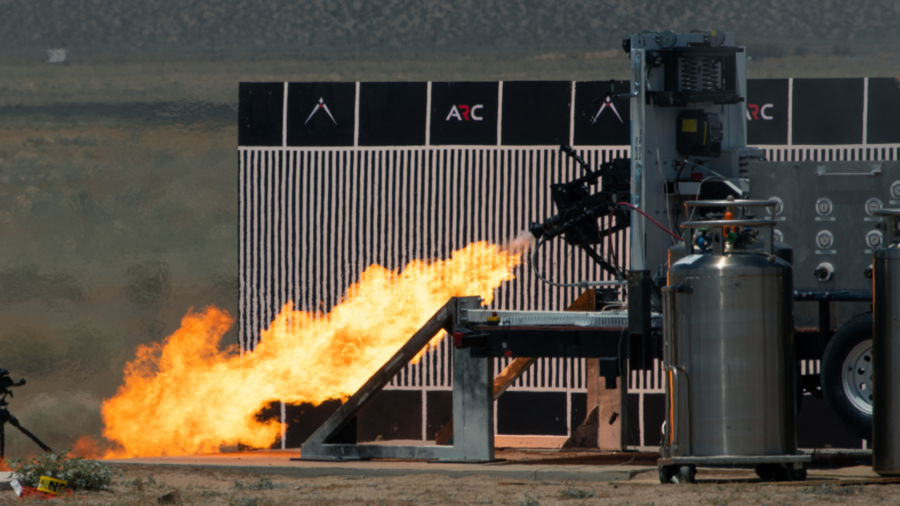
Over the last few years, a team of entirely undergraduate college students has been working on the Colossus Static Fire System. The compilation of this bi-propellant liquid rocket engine test stand provides a long-lasting hot fire capability for the SEDS UCSD program. Colossus is established as a technical development project utilizing proven designs and hardware to create a foundation for future projects and test programs. The system will be used to attain performance parameters of liquid rocket engines.
Future iterations and engine designs can progress armed with a critical mass of data and Gantner Instruments’ support. Colossus has an extensive network of sensors deployed around the system. These sensors provide the students with real-time temperature, pressure, and force data from various test stand components. Gantner Instruments provided the students at SEDS UCSD with a reliable and high-fidelity Q.series data acquisition system to acquire quality data from these sensors. The Q.series DAQ system’s superior flexibility allows the students to program automated responses to errors and actuates the fire safety valves to prevent system failures.
We at Gantner Instruments are proud of the accomplishments of SEDS UCSD and continue to look forward to the progress made by this innovative student organization!
More articles
Gantner delivers DAQ for Open Rotor Engine
Gantner Instruments has delivered its Q.series data acquisition system for a major research programme exploring Geared Pusher Open Rotor engine designs, with the goal of achieving a 20% reduction in fuel consumption and CO2 emissions.
Read more...Easy integration of Gantner Instruments product platforms into NI LabVIEW
NI LabVIEW has become an essential graphical programming environment widely used in engineering, R&D, testing, and industrial automation. Its flexibility allows engineers to quickly integrate and control diverse measurement hardware, streamlining the entire data acquisition process.
Read more...Python Integration – A New Level of Automation and Analysis
Engineering teams rely on powerful, customizable tools to handle increasingly complex test scenarios. GI.bench now includes integrated Python scripting, empowering engineers to automate measurement workflows, perform advanced real-time analyses, and seamlessly integrate with external software. This feature leverages Python's rich ecosystem, ensuring flexibility and efficiency in test and measurement projects.
Read more...Designing SHM as Long-Term Measurement Infrastructure
Across the United States, bridges, tunnels, dams, and large industrial structures are being pushed beyond their original design life and asked to carry higher traffic volumes, heavier freight, and more frequent extreme events. At the same time, the U.S. regulatory and asset-management environment still depends heavily on periodic inspection programs and documented condition data.
Read more...