
SEDS UCSD is a team of highly motivated, passionate students focusing on propulsion development, rocketry design, in-space robotics, and CubeSat hardware. The SEDS UCSD team acknowledges NASA’s focus on safety and makes every effort to incorporate NASA’s operating procedures into their design and daily operations.
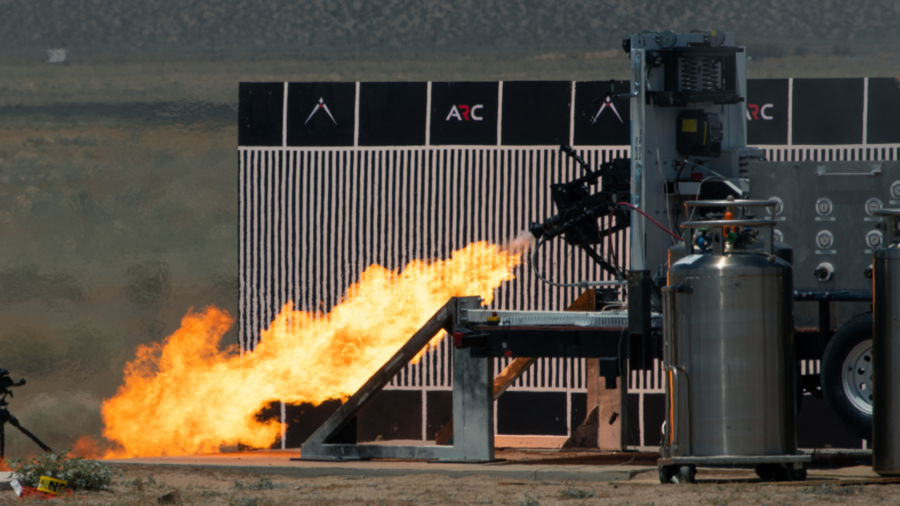
Over the last few years, a team of entirely undergraduate college students has been working on the Colossus Static Fire System. The compilation of this bi-propellant liquid rocket engine test stand provides a long-lasting hot fire capability for the SEDS UCSD program. Colossus is established as a technical development project utilizing proven designs and hardware to create a foundation for future projects and test programs. The system will be used to attain performance parameters of liquid rocket engines.
Future iterations and engine designs can progress armed with a critical mass of data and Gantner Instruments’ support. Colossus has an extensive network of sensors deployed around the system. These sensors provide the students with real-time temperature, pressure, and force data from various test stand components. Gantner Instruments provided the students at SEDS UCSD with a reliable and high-fidelity Q.series data acquisition system to acquire quality data from these sensors. The Q.series DAQ system’s superior flexibility allows the students to program automated responses to errors and actuates the fire safety valves to prevent system failures.
We at Gantner Instruments are proud of the accomplishments of SEDS UCSD and continue to look forward to the progress made by this innovative student organization!
More articles
Staying Ahead of the Curve: Meeting the Challenges of EV Powertrain Testing
In this blog post we show in advance the technical challenges of testing electric vehicles and measuring power quality and how the innovative solutions from Gantner Instruments can help to overcome these challenges.
Read more...GI.training in NRW in May 2026
We will be in North Rhine-Westphalia for the GI.basic training on May 12, 2026, and for the GI.professional training on May 13, 2026.
Read more...Business Profitability and Edge computing
Our Gantner Instruments partner in the Philippines, DMS Engineering, organized a successful event on the 25th of November, 2022 at CEBU about using Edge Computing capabilities for Asset Monitoring to maximize business profitability.
Read more...Bridge Monitoring: The Cornerstone of Tomorrow’s Sustainable Infrastructure
A modern infrastructure enables us to organize mobility more sustainably, transport goods and commodities in a climate-friendly way and take advantage of the opportunities offered by digitization. Doing without it is not an option.
Read more...