

SEDS UCSD is a team of highly motivated, passionate students focusing on propulsion development, rocketry design, in-space robotics, and CubeSat hardware. The SEDS UCSD team acknowledges NASA’s focus on safety and makes every effort to incorporate NASA’s operating procedures into their design and daily operations.
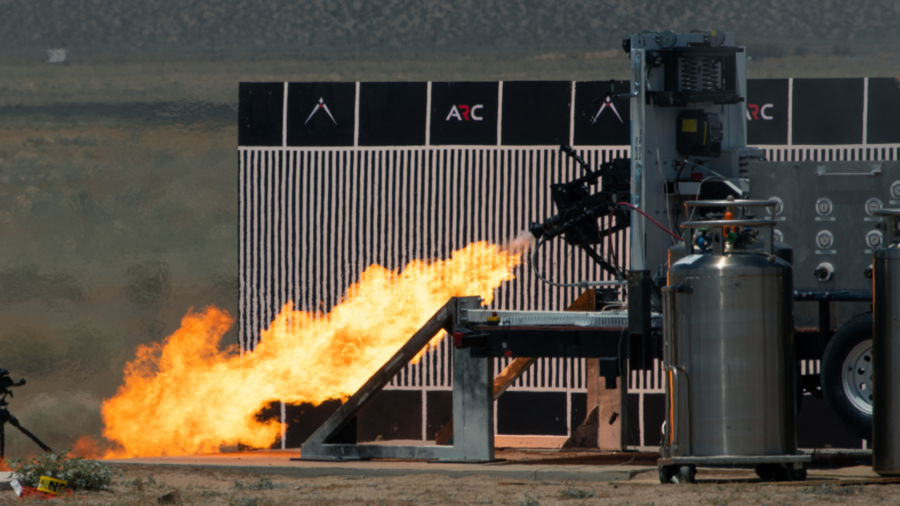
Over the last few years, a team of entirely undergraduate college students has been working on the Colossus Static Fire System. The compilation of this bi-propellant liquid rocket engine test stand provides a long-lasting hot fire capability for the SEDS UCSD program. Colossus is established as a technical development project utilizing proven designs and hardware to create a foundation for future projects and test programs. The system will be used to attain performance parameters of liquid rocket engines.
Future iterations and engine designs can progress armed with a critical mass of data and Gantner Instruments’ support. Colossus has an extensive network of sensors deployed around the system. These sensors provide the students with real-time temperature, pressure, and force data from various test stand components. Gantner Instruments provided the students at SEDS UCSD with a reliable and high-fidelity Q.series data acquisition system to acquire quality data from these sensors. The Q.series DAQ system’s superior flexibility allows the students to program automated responses to errors and actuates the fire safety valves to prevent system failures.
We at Gantner Instruments are proud of the accomplishments of SEDS UCSD and continue to look forward to the progress made by this innovative student organization!
More articles
EIS-Testing Webinar
Gantner Instruments, in collaboration with FLW, is excited to invite you to a free webinar on Tuesday, September 24th, at 11:00 AM EST: "Unlocking the Full Potential of Batteries, Fuel Cells, and Electrolyzers with EIS Testing."
Read more...Automotive Test Automation
With an increasing pressure to reduce CO2 emissions, E-mobility is a fast-growing market. While keeping this in mind, Gantner Instruments successful Q.series product line offers the best performance with maximum flexibility, to meet the growing demand for E-Mobility Battery Testing and Battery Management Systems.
Read more...Innovation in Alpine Solar: Overcoming Winter Energy Challenges
Switzerland is investing in the untapped potential of Alpine photovoltaic (PV) generation and making strides toward a sustainable future. This blog explores the innovative Sedrun Solar project, a pioneering high-altitude PV initiative to fill the winter energy gap. Uncover how rigorous testing and insightful data collection, facilitated by Gantner Instruments, are paving the way for optimizing this renewable energy source.
Read more...High Performance Measuring Module D107 for Frequencies
The Q.bloxx D107 is a new measurement module for the acquisition of frequencies and incremental signals. Due to its fast signal conditioning capability with a clock speed of 288 MHz, the new module is suitable for extreme measurement of rotational speeds, which were not previously possible in this price range.
Read more...