

SEDS UCSD is a team of highly motivated, passionate students focusing on propulsion development, rocketry design, in-space robotics, and CubeSat hardware. The SEDS UCSD team acknowledges NASA’s focus on safety and makes every effort to incorporate NASA’s operating procedures into their design and daily operations.
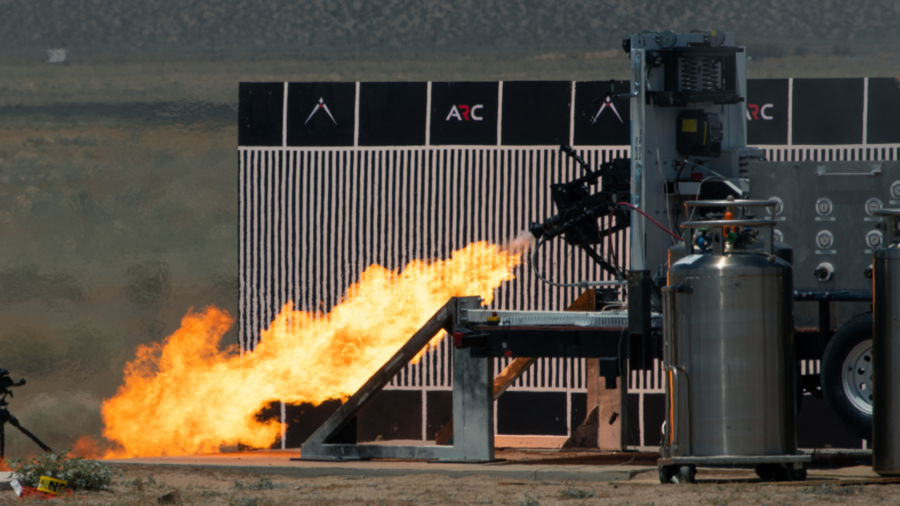
Over the last few years, a team of entirely undergraduate college students has been working on the Colossus Static Fire System. The compilation of this bi-propellant liquid rocket engine test stand provides a long-lasting hot fire capability for the SEDS UCSD program. Colossus is established as a technical development project utilizing proven designs and hardware to create a foundation for future projects and test programs. The system will be used to attain performance parameters of liquid rocket engines.
Future iterations and engine designs can progress armed with a critical mass of data and Gantner Instruments’ support. Colossus has an extensive network of sensors deployed around the system. These sensors provide the students with real-time temperature, pressure, and force data from various test stand components. Gantner Instruments provided the students at SEDS UCSD with a reliable and high-fidelity Q.series data acquisition system to acquire quality data from these sensors. The Q.series DAQ system’s superior flexibility allows the students to program automated responses to errors and actuates the fire safety valves to prevent system failures.
We at Gantner Instruments are proud of the accomplishments of SEDS UCSD and continue to look forward to the progress made by this innovative student organization!
More articles
Q.series X D101 SV: Digital Measurement Module with Sensor Supply
The Q.series X D101 4 x Lemo 2B SV from Gantner Instruments is a digital measurement module that has been engineered to facilitate a broad spectrum of digital signal processing tasks. It is designed with a focus on providing accurate and rapid data acquisition for industrial applications that require high-performance measurement capabilities with integrated sensor excitation.
Read more...Gantner Instruments Helps Flood Victims in the Philippines
Yet another terrible natural disaster has left its mark. In the Philippines, the typhoon Hayian has cost the lives of countless people. Gantner Instruments made a donation to support reconstruction.
Read more...Webinar – Top Considerations for Selecting a Data Acquisition System for Testing Application
In today’s ever-changing technology environment, Test Engineers face bigger & more complex challenges than ever before when choosing a Future Proof, Robust & Expandable Data Acquisition System.
Read more...Trapped in Ice
Arctic ice is disappearing — the question is how fast. Summer sea ice could endure 100 more years, or it could vanish later this decade, with disastrous consequences for the rest of the planet. To nail down the answer, an expedition to the top of the world has to uncover the complex physics of ice.
Read more...