


Introducing GI DAQ Library v2.5
The new GI DAQ Library v2.5 replaces the previous VI package with a fully refactored, object-oriented architecture that delivers faster integration, cleaner design, and future-ready flexibility. Built to NI LabVIEW style guidelines, the library enables you to read and write to Gantner DAQ hardware with just a few clicks, eliminating the need for manual protocol handling or custom driver development.
Whether you’re building a quick test rig or scaling up to a full automation suite, the new library gives you direct access to all Q.controller-based DAQ systems using a single unified interface.
What’s New in V2.5?
The updated library makes setup and integration as easy as possible:
- Direct support for buffered and real-time data access, with WebSocket integration.
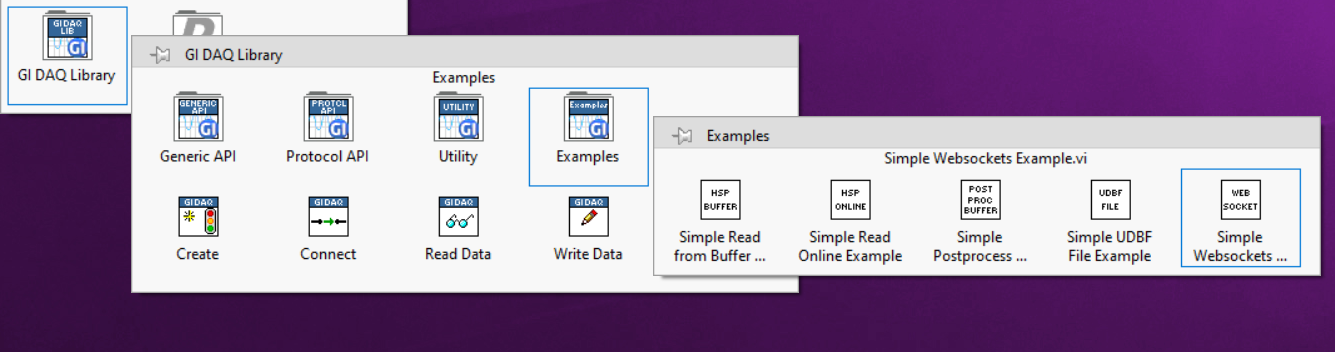
- Read from instrument buffers, post-process buffers, or decode UDBF files.
- Write values online during test execution.
- Install directly via .vip package with no extra dependencies or DLL juggling.
- Compatible with LabVIEW 2017 and later, in both 32-bit and 64-bit versions.
- Built-in example VIs, demo projects, and a template application to get started in minutes.
Simpler Setup, Smarter Workflow
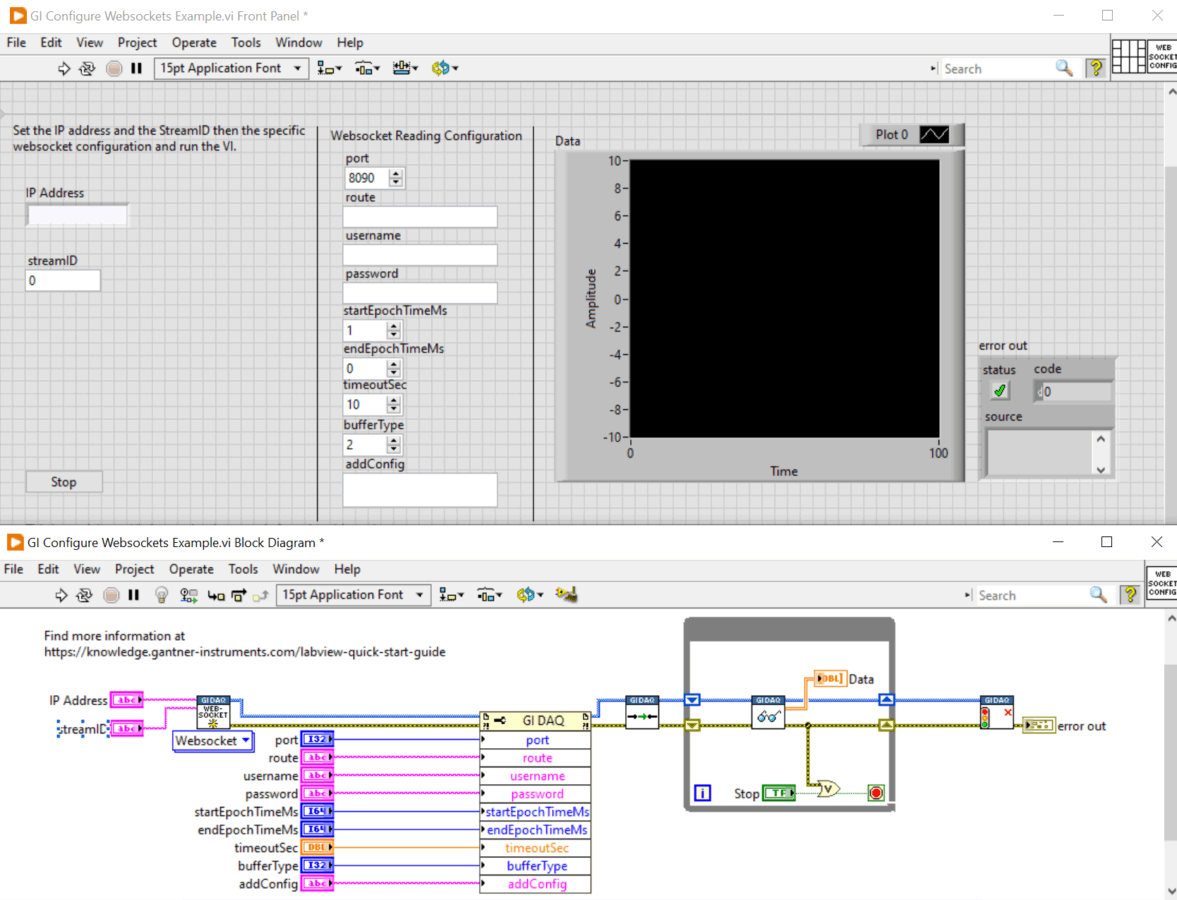
With the GI DAQ Library v2.5, everything you need is in one place. You no longer need to manage multiple drivers or cobble together partial integrations. The library is self-contained, adheres to NI conventions, and includes comprehensive documentation for use with any Q.controller family product.
Whether you want to:
- Integrate live data streaming into LabVIEW for real-time dashboards
- Log synchronized temperature, current, and strain values into a structured file
- Create custom HIL or endurance testing routines using LabVIEW logic
The GI DAQ Library gives you the building blocks to do it faster and more reliably.
Built for Engineers, Not Just for Developers
Gantner’s new VI structure is not only easier to use, it’s engineered for precision. The architecture ensures minimal latency, maximum reliability, and high-quality signal fidelity across complex test setups. That means better data, less code, and a workflow you can trust.
Why Gantner Instruments + LabVIEW?
- Fast and accurate access to all Gantner DAQ signals
- No programming deep-dive required—drag, drop, and go
- Streamlined LabVIEW integration with templates, examples, and docs
- Built-in support for current and future testing workflows
Watch the video to see how fast and simple it is to integrate your Gantner DAQ system into LabVIEW:
National Instruments™, NI™, and LabVIEW™ are trademarks of National Instruments. Gantner Instruments is neither affiliated with nor endorsed by National Instruments.
More articles
Systèmes d’acquisition de données portables et mobiles
De nombreuses raisons justifient un système de mesure flexible et robuste qui doit être facile à transporter pour collecter des données de mesure à différents endroits. Il peut s'agir, par exemple, de mesures à court terme sur des machines ou des composants d'usine lors de la mise en service après un entretien, ou de mesures récurrentes sur des ponts ou d'autres ouvrages d'art.
Read more...Changing demands within Automotive Testing – Webinar
Want to know more about changing demands within Automotive Testing?
Read more...Long term Volcano Monitoring – A field study
Monitoring volcano activity is an important issue in the mitigation of natural hazards. Recently, most fatal issues occurred on volcanoes with low-energy and moderate activity, making them attractive touristic places (e.g., the 2014 Mount Ontake eruption in Japan). For these types of volcanoes, monitoring involves multiphysics measurements on dense networks. Distributed networks of sensors must be easily adapted to the volcano’s evolving state and the appearance of new active areas like fumaroles or high heat flux in the soil.
Read more...14e salon international des batteries de Chine
La voie vers une réduction des cycles de développement des bancs d'essai de batteries, une plus grande précision et une meilleure isolation de la haute tension commence avec Gantner Instruments au China International Battery Fair, qui se tiendra à Shenzhen du 19 au 21 mars 2021.
Read more...