


Key Challenges in Test Bench Development
- Navigating Compliance and Safety Standards
Test benches in regulated industries must adhere to rigorous standards such as CE marking and EU conformity directives. Achieving compliance requires meticulous attention to detail and can become a complex, time-consuming task without the right tools to manage and document regulatory requirements throughout the development process. - Managing System Complexity and Risk
Test benches often involve monitoring industrial devices or simulating critical operations, introducing significant operational risks. Inadequate risk management can lead to equipment failure, safety hazards, and inaccurate test results. Integrating robust risk management strategies from the outset is crucial to ensure system reliability and operator safety. - Ensuring Seamless System Integration
Integrating various hardware and software components can present many challenges, especially when multiple devices need to operate synchronously. Effective system integration simplifies maintenance, ensures accurate data acquisition, and facilitates rapid troubleshooting. Without seamless integration, system performance can suffer, and diagnosing issues becomes more difficult. - Documentation and Traceability
Proper documentation is not only required for compliance with regulatory standards, but ensures transparency and aids in future maintenance. However, tracking every component and process can be overwhelming without efficient tools to support documentation and traceability.
How test.con Addresses These Challenges
Streamlined Graphical Programming for Real-Time Applications
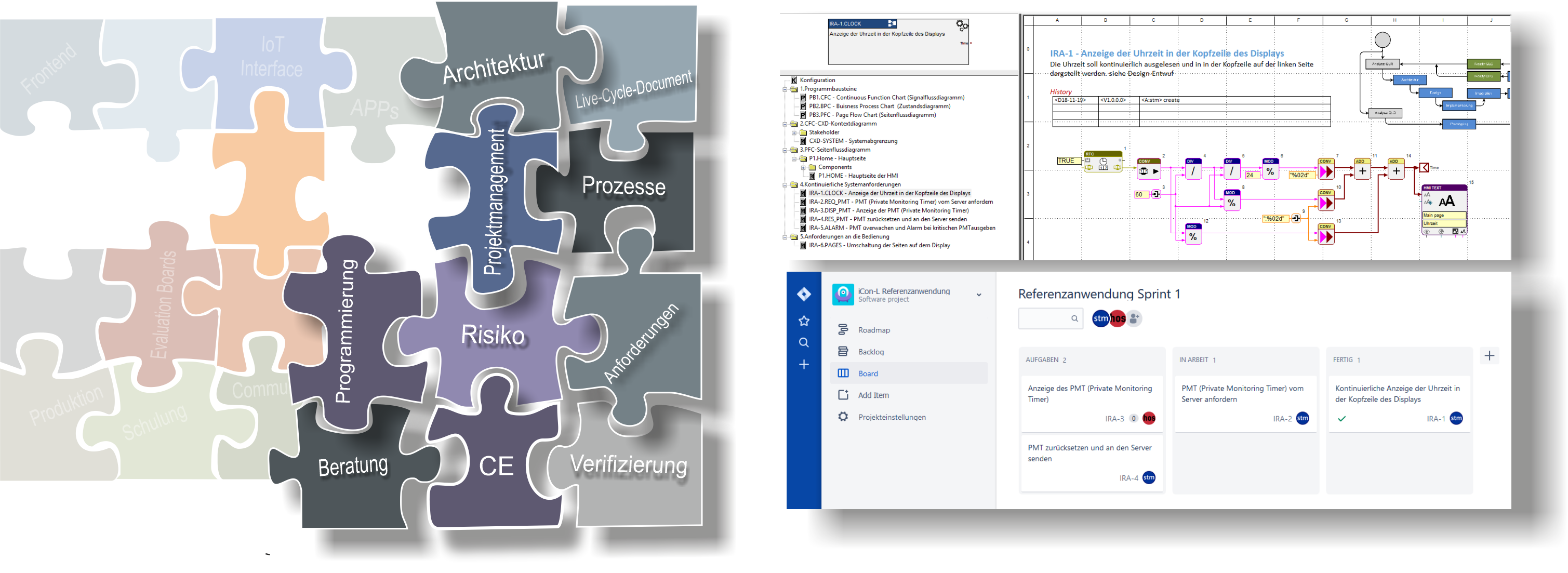
test.con offers intuitive, drag-and-drop graphical programming for Gantner’s Q.series X controllers, eliminating the need for traditional coding. Users can efficiently design custom logic, data processing algorithms, and visualization functions. This approach accelerates development and makes programming accessible to engineers who may not have extensive software development experience.
Powerful Risk and Compliance Management
With its model-based development approach, test.con allows for the integration of complex control logic and safety functions at every stage. Regulatory requirements can be managed within the software, enabling the incorporation of industry standards and the documentation necessary for CE certification. test.con also supports programmable automation controller (PAC) functionality, providing the flexibility to meet specific safety and regulatory demands across different industries.
Integrated System Architecture and HMI Design
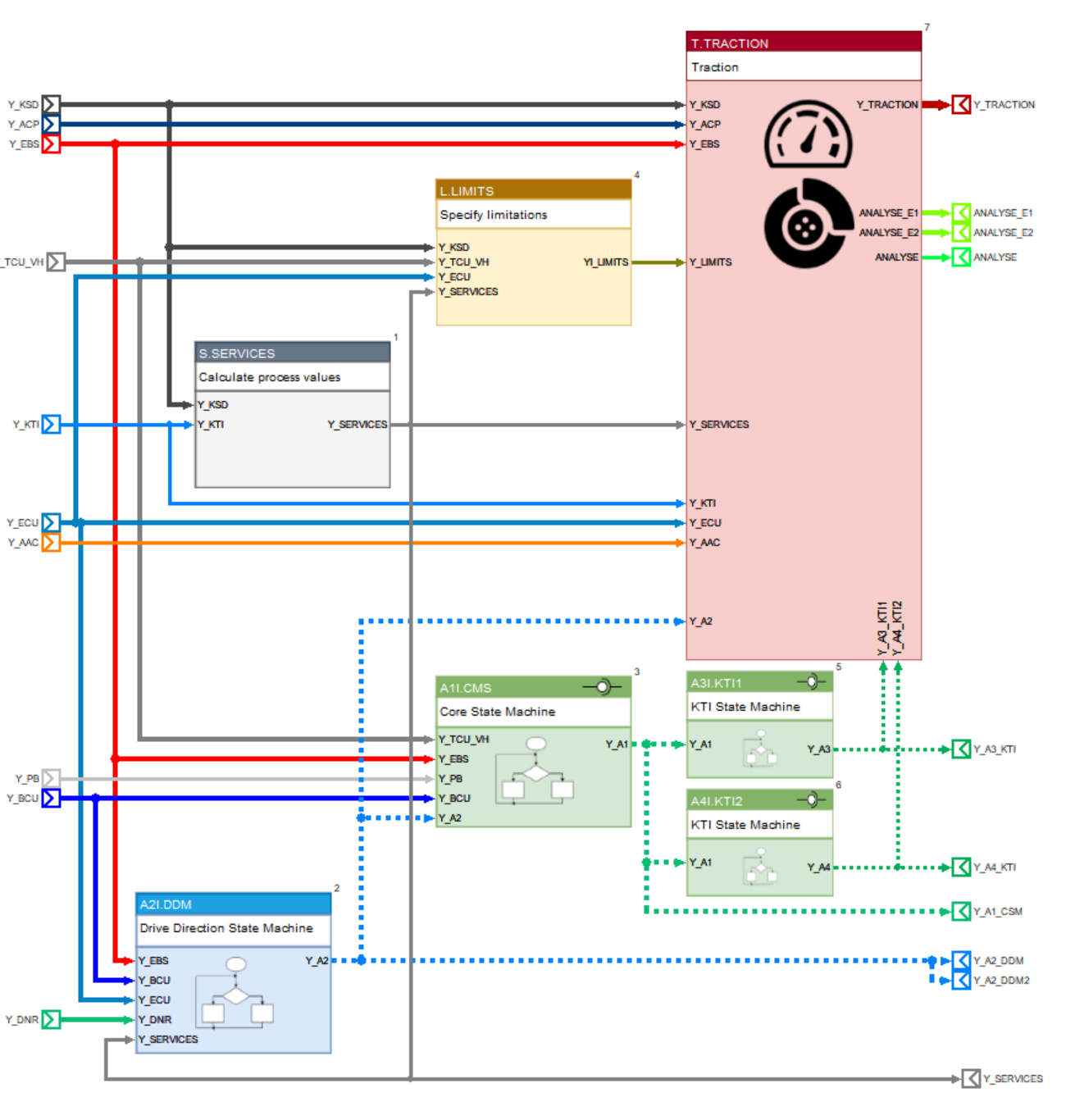
test.con has the ability to design human-machine interfaces (HMIs) directly within the platform. This capability enables operators to visualize and control the entire system in real-time, adding critical layers of monitoring and control for risk mitigation and seamless system integration. By unifying system architecture and HMI development, test.con enhances operational efficiency and reduces complexity.
Built-In Documentation and Traceability
test.con integrates documentation and traceability into the development process. From initial requirements analysis to final testing, the software supports comprehensive tracking of every element within the project, from individual components to complete system architectures. This integrated documentation facilitates CE compliance and provides a complete system record for future maintenance and audits.
Partner with Gantner Instruments for Effective Test Bench Solutions
Whether you’re developing a complex test bench or seeking support for regulatory compliance and risk management, Gantner Instruments, in partnership with ProSign, offers the expertise and technology to assist you. test.con provides a comprehensive solution for building reliable, compliant, and efficient test benches tailored to your specific project needs.
Get Started with test.con
Ready to overcome the challenges of test bench development? Contact our team for a consultation, and we’ll guide you in implementing a solution that meets the highest industry standards.
Learn more about test.con and enhance your test bench development today.
Want to see a hands-on example?
This video guides you through all the required steps, including system design, modeling, and creating a curve generator.
More articles
Q.series X D107 SV: Digital Measurement Module with Sensor Supply
The Q.series X D107 SV module from Gantner Instruments provides a comprehensive solution for digital signal acquisition and sensor supply needs. Designed for distributed installations requiring precise digital measurements, this module enhances the Q.series product family's robust offering.
Read more...Apprenticeship at Gantner Instruments
We open our doors to exclusive insights into our company by talking to our apprentice, Philip, about his experiences with his apprenticeship at Gantner Instruments. In this interview, Philip tells us his story, from his search for an apprenticeship to his everyday life with us, and provides a deeper insight into a corporate culture that is much more than just a workplace.
Read more...16th Aviation Forum 2026
Join us at Europe's leading aerospace conference and exhibition, where OEMs, suppliers, and industry leaders come together to shape the future of aviation.
Read more...Test of Battery and Battery Management Systems
At a very early stage Gantner Instruments was involved with special products for testing of batteries in the E-Drive environment. An already existing and successful product range is now supplemented with a useful novelty.
Read more...