
Gantner Instruments Environment Solutions develops and produces monitoring and control solutions for PV assets. The advanced products made in Germany are already used in over 37 countries. Managing Director Jörg Scholz and his employees are proud to be part of the rapid and future-oriented development in this field of renewable energies.
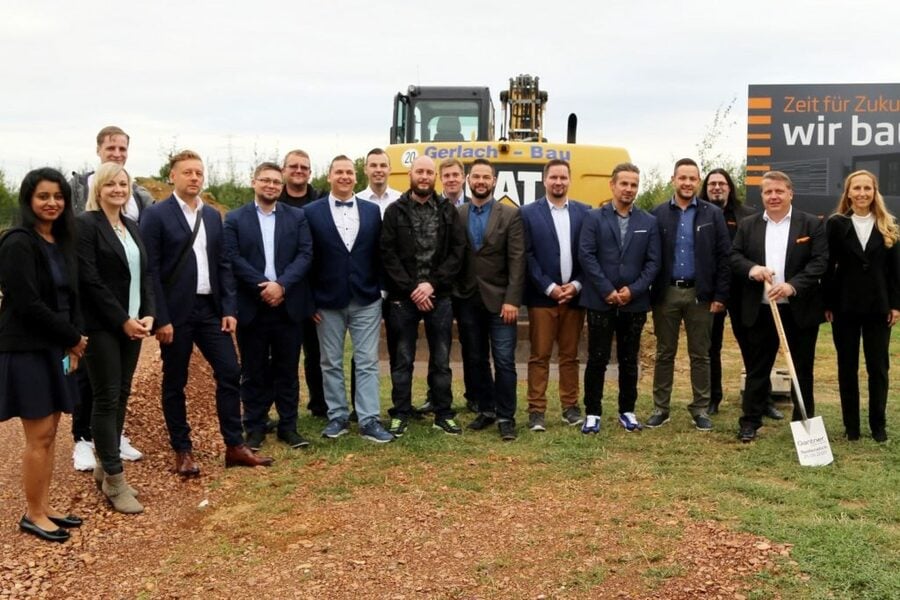
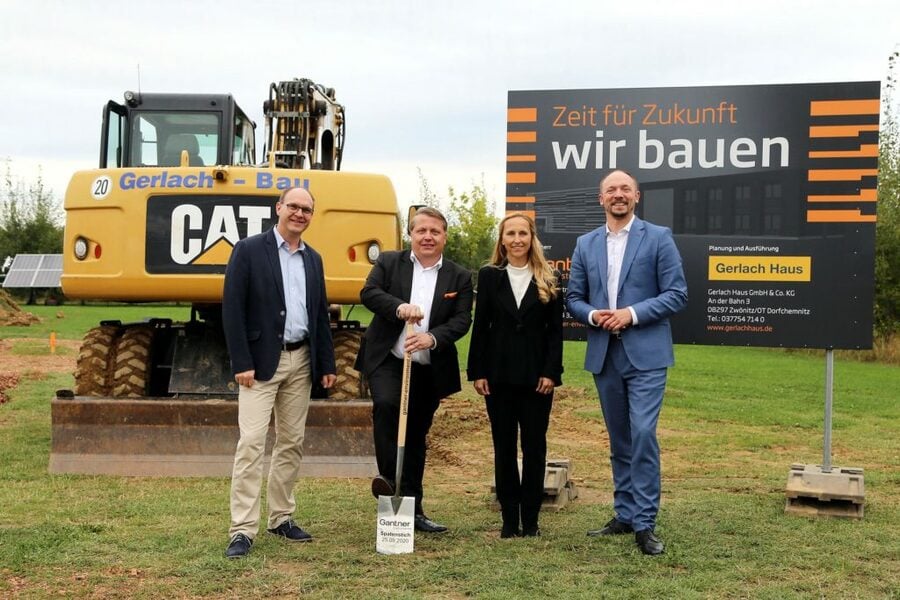
Due to its successful business development, Gantner Instruments moved into a state-of-the-art, innovative company building “with an outstanding design” three years ago. According to Jörg Scholz, this contributed to making the products’ quality and individuality visible to the world. “This enabled us to convince a considerably larger number of customers to work with Gantner Instruments.”
Gantner Instruments is currently delivering a complete monitoring and control solution for the 187 MW solar park “Weesow-Willmersdorf” of Energie Baden-Württemberg “EnBW.” The solar park is the largest photovoltaic project in Germany that has been implemented without subsidies. A total of 465,000 solar modules are installed and generate 187,000 MWh of electricity, equal to 51,000 households. This Solar park prevents approximately 129,000 tons of CO₂ emissions on an annual basis. All our primary customers are currently forecasting significant growth for the next few years and expect us to expand our capacities significantly.
More articles
Webinar – Essential Test & Measurement Technologies
Engineers face significantly complex challenges when deciding which future-proof, robust, and expandable data acquisition systems are best for their application(s). Thankfully three industry experts from Gantner Instruments will be presenting in a series of webinars hosted by our Canadian partner, Hoskin Scientific, to help make the DAQ selection process a little bit easier.
Read more...Designing SHM as Long-Term Measurement Infrastructure
Across the United States, bridges, tunnels, dams, and large industrial structures are being pushed beyond their original design life and asked to carry higher traffic volumes, heavier freight, and more frequent extreme events. At the same time, the U.S. regulatory and asset-management environment still depends heavily on periodic inspection programs and documented condition data.
Read more...Precise Temperature Measurement with Pt100
Temperature measurement is one of our key competence areas. Here we maintain a position of global leadership. Our advanced 4-channel Q.bloxx A105 measurement module sets new standards in terms of stability and precision. For many different applications, the extremely precise and stable measurement of temperatures is an absolute prerequisite for the control of processes or the success of product innovations. In addition to the essential precision, particularly important aspects of this are the maintenance of stability when changes occur in the ambient temperature and ensuring long-term stability.
Read more...End-of-Line Testing of Preh’s Battery Management Systems
End-of-line testing for high-voltage Battery Management Systems (BMS) is critical to ensuring performance, safety, and longevity, both for the systems themselves and the vehicles they power. As battery technologies advance, BMS testing grows increasingly complex. Discover how Preh uses Gantner Instruments' high-voltage data acquisition technology for end-of-line testing, specifically designed to meet the demands of e-mobility.
Read more...