


Advanced measurement solutions tailored for next-gen aerospace innovation
Gantner Instruments will be present to share insights into how our data acquisition and testing technologies can help streamline performance validation in modern aerospace applications. By combining precise data collection, intelligent analytics, and scalable hardware, our solutions are ideal for meeting the stringent requirements of aerospace engine testing and development.
- Modular DAQ Systems: Gain the ultimate measurement flexibility and scalability for complex aerospace testing scenarios.
- Extreme Reliability: Monitor critical parameters—such as temperature—under harsh conditions with proven precision.
- Real-Time Insights: Benefit from fast data processing that enables timely, data-driven decisions during test campaigns.
- Data Security: Protect sensitive aerospace application data with enhanced security features and architecture.
Date & Location
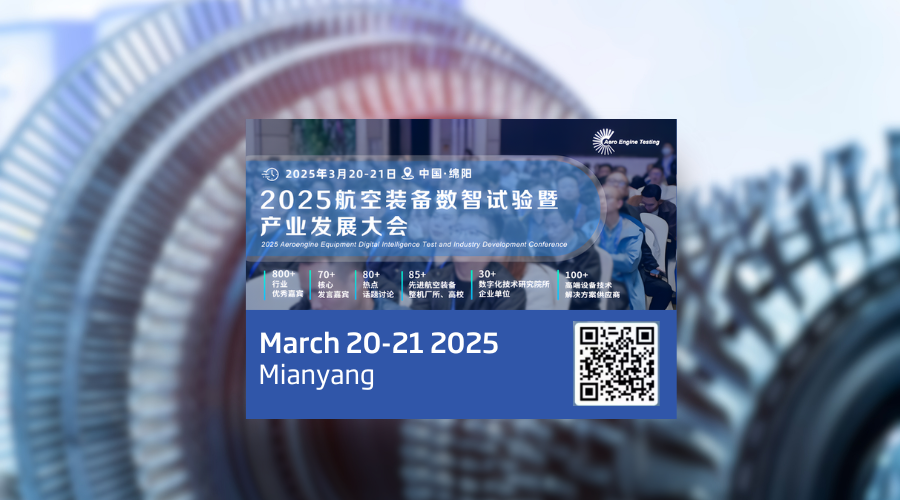
- Date: March 20–21, 2025
- City: Mianyang
For more details, visit the conference website.
Contact the team
If you plan on attending, we look forward to connecting with you and discussing how Gantner Instruments can support your testing needs. For questions or to arrange a meeting, please reach out to Mr. Gavin Wen at gavin.wen@gantner-instruments.cn.

More articles
Putting Intelligent Heat Pump Control to the Test Real World Performance Evaluation
Given the increasing share of renewable energies in the electric energy system, flexibilities are key to match production and demand. Domestic heat pumps are expected and promoted to further increase as a key technology. Research is ongoing to utilize these heat pump systems and their thermal storage as flexibilities within the electrical energy system’s superordinate level.
Read more...Gantner Instruments delivers DAQ system to the Technical University of Denmark – DTU
Gantner Instruments is proud to announce that is has delivered it’s Q.series Data Acquisition System to the Technical University of Denmark (DTU) for their Villum Center for Advanced Structural and Material Testing (CASMaT). The center is a collaboration between DTU Civil Engineering, DTU Mechanical Engineering and DTU Wind Energy with the objective to strengthen experimental research in mechanics of structures and materials. A large donation from VILLUM FONDEN made it possible to establish the center.
Read more...8 Tips to Consider When Buying a Strain Gage Amplifier
The strain gage is one of the most important tools of the electrical measurement technique applied to the measurement of mechanical quantities. As their name indicates, they are used for the measurement of strain.
Read more...Gantner Instruments is attending i-MAP
We are thrilled to announce the CSIR-SERC Diamond Jubilee Conference on Monitoring, Assessment and Predictive Maintenance of Critical Infrastructure (i-MAP), set to take place on May 21-23, 2025, in Chennai
Read more...