



SEDS UCSD is a team of highly motivated, passionate students focusing on propulsion development, rocketry design, in-space robotics, and CubeSat hardware. The SEDS UCSD team acknowledges NASA’s focus on safety and makes every effort to incorporate NASA’s operating procedures into their design and daily operations.
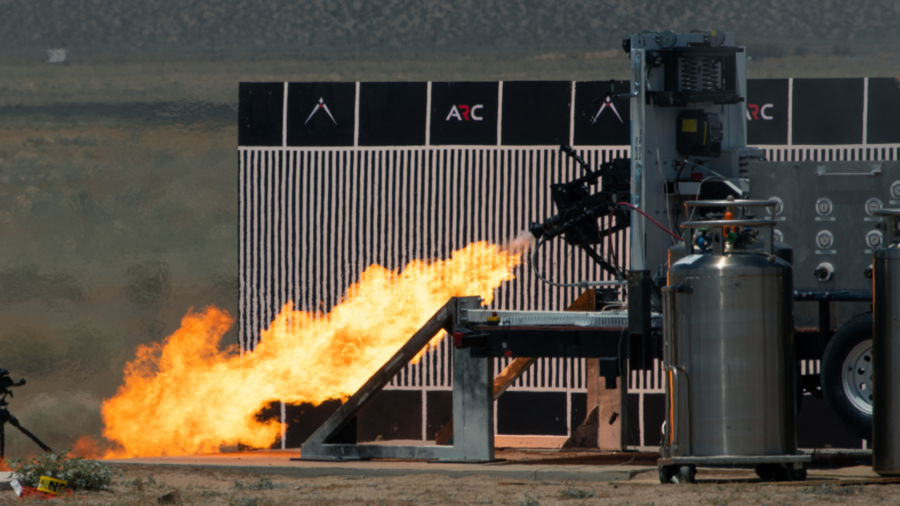
Over the last few years, a team of entirely undergraduate college students has been working on the Colossus Static Fire System. The compilation of this bi-propellant liquid rocket engine test stand provides a long-lasting hot fire capability for the SEDS UCSD program. Colossus is established as a technical development project utilizing proven designs and hardware to create a foundation for future projects and test programs. The system will be used to attain performance parameters of liquid rocket engines.
Future iterations and engine designs can progress armed with a critical mass of data and Gantner Instruments’ support. Colossus has an extensive network of sensors deployed around the system. These sensors provide the students with real-time temperature, pressure, and force data from various test stand components. Gantner Instruments provided the students at SEDS UCSD with a reliable and high-fidelity Q.series data acquisition system to acquire quality data from these sensors. The Q.series DAQ system’s superior flexibility allows the students to program automated responses to errors and actuates the fire safety valves to prevent system failures.
We at Gantner Instruments are proud of the accomplishments of SEDS UCSD and continue to look forward to the progress made by this innovative student organization!
More articles
Gantner Instruments and PhotonFirst Sign MoU
Gantner Instruments and PhotonFirst have signed an MoU to advance fiber optic sensing technologies. This partnership focuses on innovative measurement solutions.
Read more...PV & Grid Integration Symposium
Meet us at the 2019 PV Systems Symposium, the leading industry get together for PV Monitoring and grid integration in Albuquerque (New Mexico), United States.
Read more...Voltage IEPE Sensor Measurement Data Acquisition (DAQ) with Q.bloxx A111
Q.bloxx is the ideal DAQ solution for widely distributed installations, electrical panels, and environmental enclosures. Q.bloxx measurement modules provide integrated signal conditioning and arithmetic functions, packaged in modular, DIN Rail mountable enclosures that easily snap together for quick system expansion.
Read more...End-of-Line Testing of Preh’s Battery Management Systems
End-of-line testing for high-voltage Battery Management Systems (BMS) is critical to ensuring performance, safety, and longevity, both for the systems themselves and the vehicles they power. As battery technologies advance, BMS testing grows increasingly complex. Discover how Preh uses Gantner Instruments' high-voltage data acquisition technology for end-of-line testing, specifically designed to meet the demands of e-mobility.
Read more...