Austria | Germany | France | Sweden | India | USA | China | Singapore

Structural
Health
Monitoring (SHM)

Reliable SHM requires stable, synchronized measurements that remain trustworthy over time.

Reliable SHM Starts with Stable Measurement.

Civil structures rarely fail without warning. Structural Health Monitoring (SHM) captures early signals of structural change and supports safer, evidence based decisions.

Using sensors and continuous measurement, structural health monitoring systems observe how infrastructure such as bridges, tunnels, dams, and buildings behaves under real operating conditions. Measurements of strain, vibration, displacement, and temperature provide the data needed for reliable structural analysis and early detection of deterioration.  
Applications range from bridge structural health monitoring to building structural health monitoring, where long term measurements reveal how loads, environment, and aging affect structural performance. Reliable SHM depends on stable, synchronized data despite environmental influences, long sensor distances, and harsh operating conditions.

Reliable SHM requires stable, synchronized measurements that remain trustworthy over time.

Reliable SHM Starts with Stable Measurement.

+

Rugged DAQ with IP6x

+

Video Time Sync

+

Central Appliance

+

Acoustic Emission (AE)

+

Railway Bridge Monitoring

+
  • Remote Configuration and Setup
  • Visualize
  • Alarming
  • Data Analytics with Python
+

Time Synchronization off Q.controller

  • GPS
  • DCF77
  • NTP
  • PTPv2
+

Strain
Number and weight of vehicles

+

Inclination
Positioning and deflection

+

Vibration
Structural damage and stiffness

+

Distributed DAQ devices

+

Wireless Sensor Measurements

+

Mobile DAQ
GPS data

+

Environmental Data
Effects of wind and temperature
Product Benefits

Industry-Leading Precision

Ultra-low noise, high-speed DAQ ensures the most accurate SHM data available.

Modern Data Acquisition

Low-latency, high-accuracy DAQ systems capture critical stress and load changes.

Scalable & Modular Design

Easily expandable from single structures to nationwide monitoring networks.

Seamless Sensor Integration

Compatible with fiber-optic, MEMS, and wireless sensor networks.

AI-Powered Predictive Analytics

Detects patterns and structural weaknesses before failures occur, reducing unexpected downtime by up to 40%.

Edge & Cloud Computing

Secure, real-time remote monitoring for fast, data-driven decisions.

Product Architecture

Who trusts Gantner for Structural Health Monitoring?

Data collection in the cloud

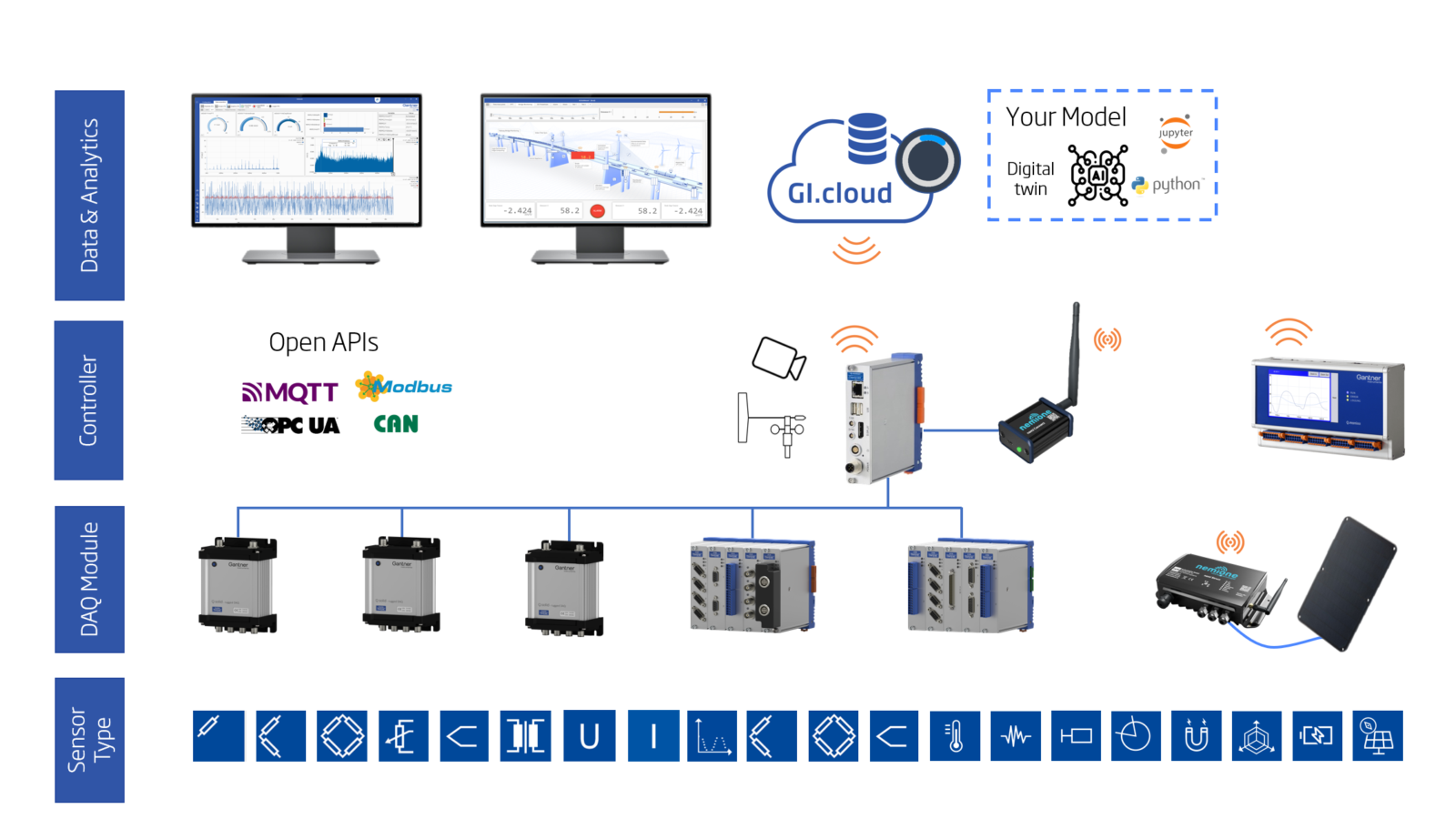
Secure cloud storage for continuous and event-based data acquisition in structural health monitoring. Real-time visualization of synchronized SHM measurement data via project-related dashboards. Limit-based alarms detect status changes at an early stage. JupyterLab integration allows you to implement your own evaluation algorithms and status models in Python.

Recommended products:

  • GI.cloud (European hosting)
  • Other platforms (AWS, Azure, Google, …)

Intelligent controller in the field

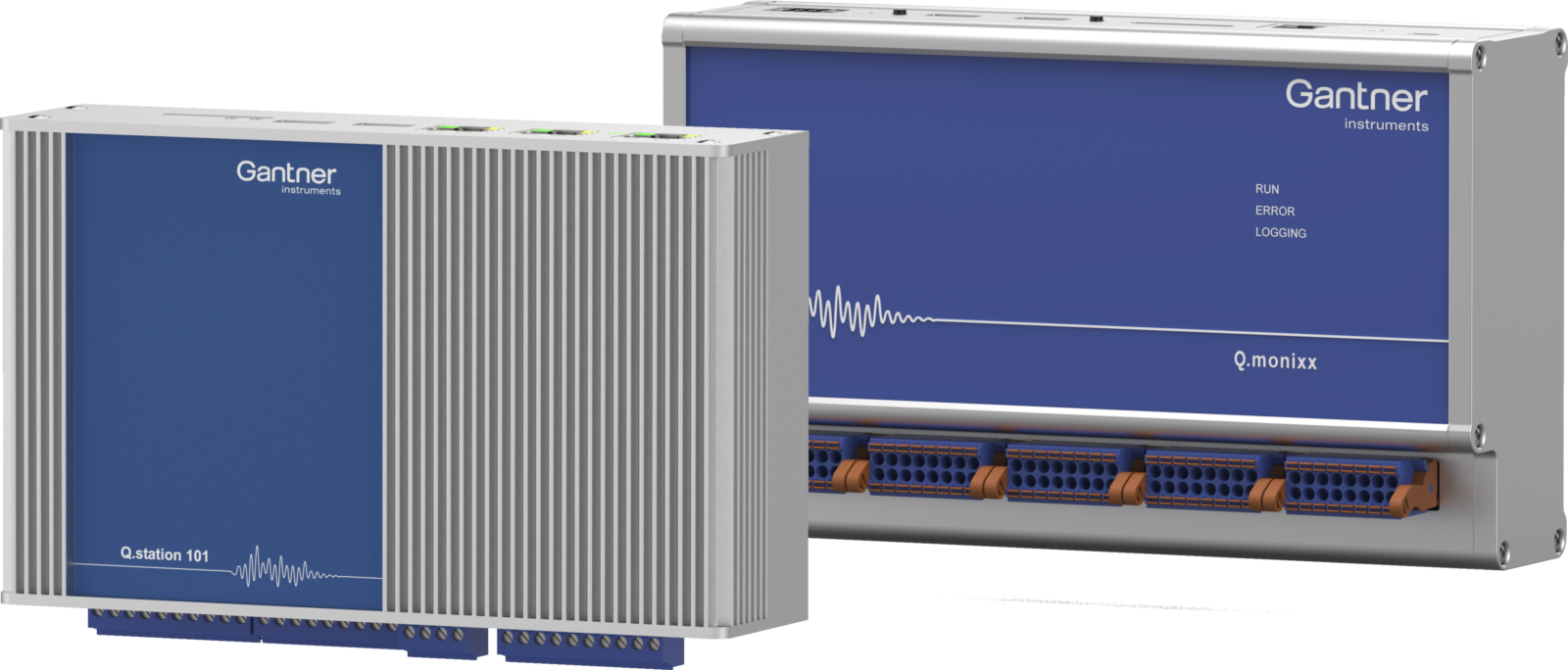
The controller ensures synchronous acquisition of all sensors and stores the data locally (continuously or on demand). It performs initial preprocessing and data compression, e.g., filtering and statistical measures (min, max, avg, rms, etc.). From here, the data is sent via FTP and/or to cloud storage. Industrial IoT protocols such as OPC UA and MQTT are also supported.

Recommended products:

  • Q.station 101
  • Q.monixx A117

Modular and Flexible Measurement Modules

Distributed, time-synchronized measurements from various sensors with sampling rates of
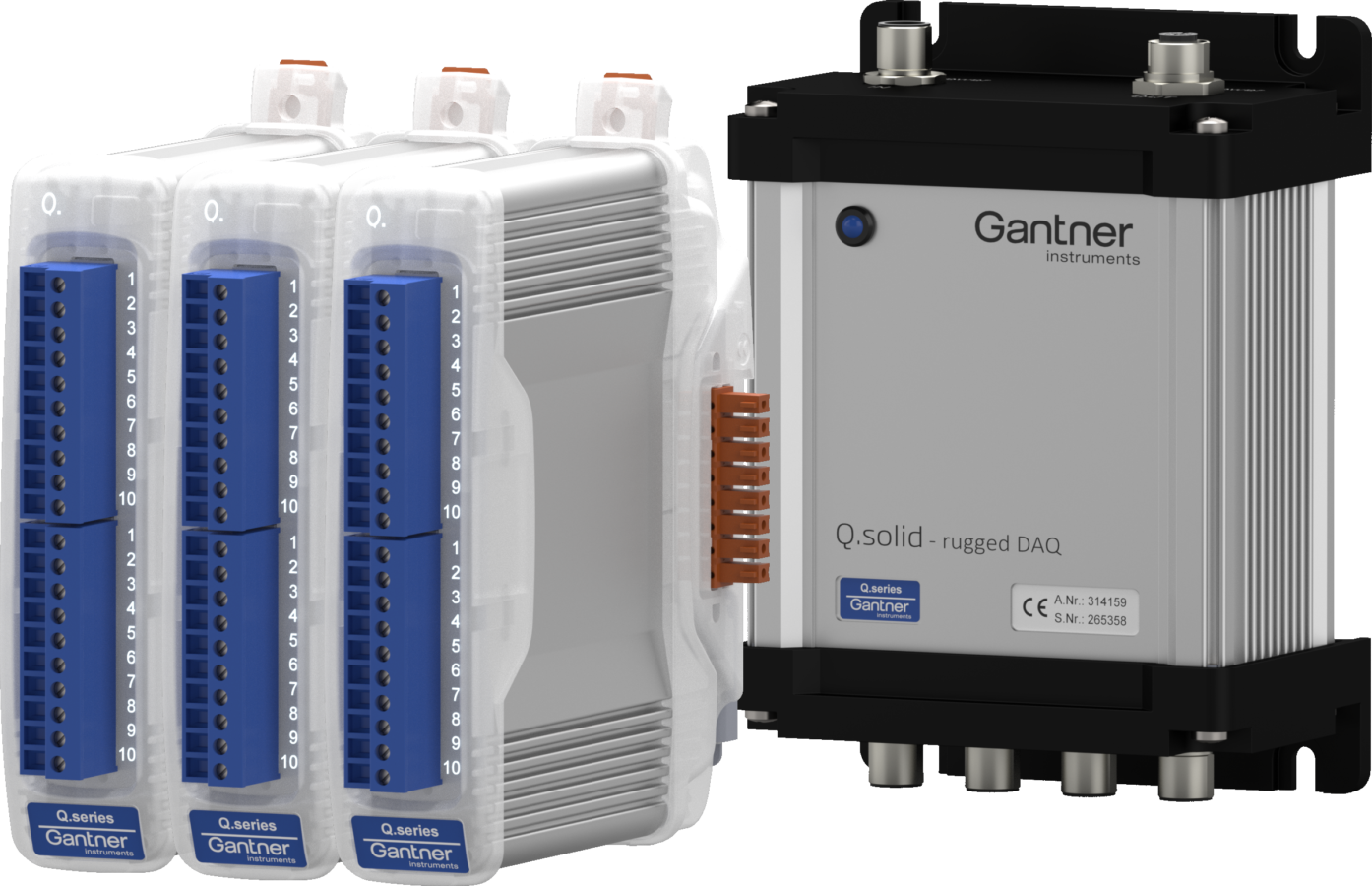
up to 100 kS/s, 24-bit resolution per channel, and accuracies of 0.01%. Built-in signal conditioning, multiple filter options, and galvanic three-way isolation per channel for robustness. Place modules up to several hundred meters apart with standard bus cables, or up to 3.8 kilometers apart with fiber-optic cables.

Recommended products:

  • Q.bloxx (Classic series)
  • Q.solid (Rugged DAQ)

Solutions and System Integration

We design and deliver integrated monitoring solutions that combine sensors, power supply, communication, and data acquisition into reliable turnkey systems.

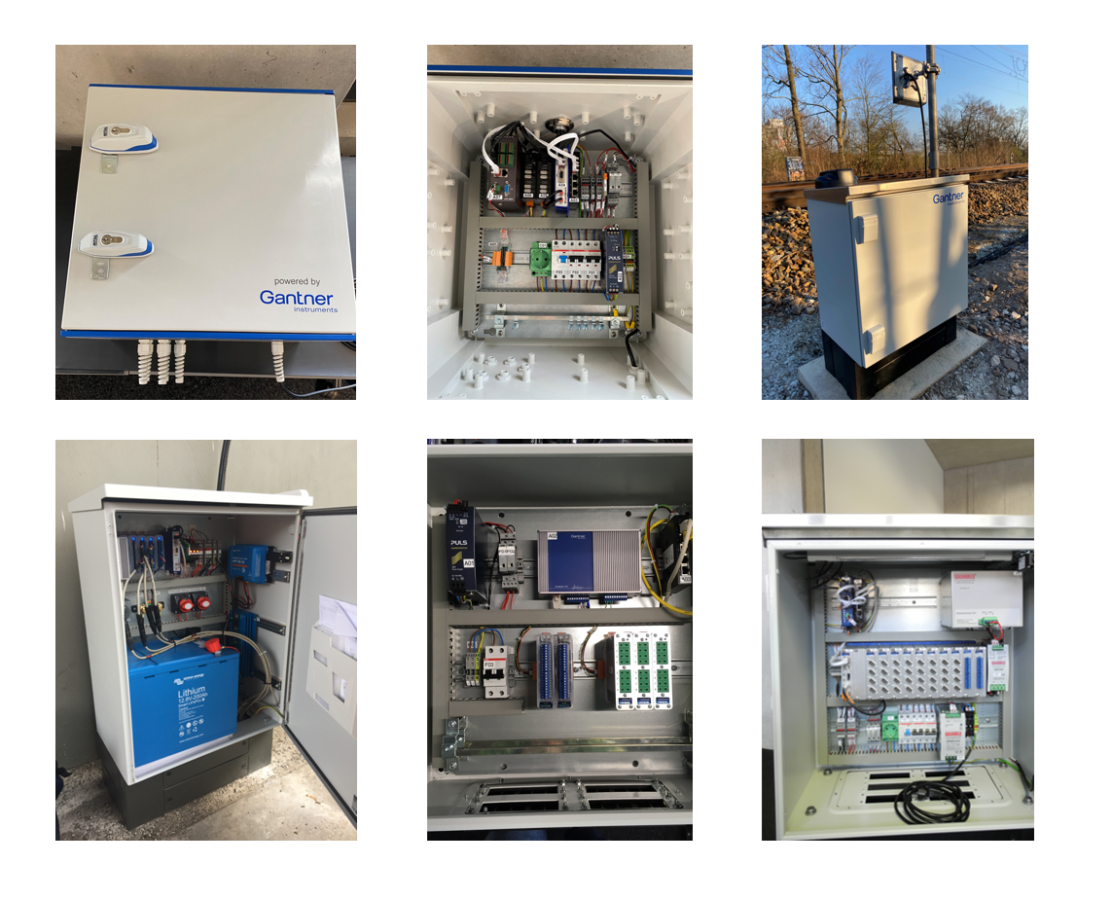
  • Customized Cabinets
    Application specific measurement cabinets with integrated DAQ hardware, power management, and communication.
  • Grid and Offgrid Solutions
    Reliable power concepts using grid connection or autonomous solar systems for remote monitoring.
  • Weather Stations
    Integration of meteorological sensors such as irradiance, temperature, wind, and humidity.
  • IP Cameras
    Industrial cameras for visual monitoring synchronized with measurement data.
  • Liquid Leveling Systems (LLS)
    High precision systems for structural displacement and deformation monitoring.

Q.solid - rugged DAQ

Designed for robust distributed data acquisition in harsh outdoor environments, this module combines mechanical durability with flexible Q.series integration.

  • Rugged IP66 housing for reliable outdoor operation
  • Long distance UART communication within distributed systems
  • Combined UART and power in and out via M12 connectors
  • M12 termination plug with integrated resistor for the last module
  • Compatible with any Q.series IO module

Wireless Measurement

Powerful Integration of Wireless Sensors into Gantner’s Data Ecosystem

The integration of wireless sensors into Gantner Instruments’ data acquisition ecosystem is fully supported by advanced software platforms such as GI.bench and GI.cloud. These platforms offer robust data logging, visualization, alarming, and analysis tools, along with open interfaces such as EtherCAT, Modbus, OPC UA, and MQTT for seamless system integration and interoperability.

Unified Monitoring: Acoustic Emission and Multi Parameter SHM

Acoustic emission enables real time detection of active damage mechanisms such as crack initiation, crack growth, and material fatigue, providing early warning before visible structural deterioration occurs.

Benefit of Acoustic Emission
Detects active damage mechanisms such as crack initiation, crack growth, and material fatigue in real time, enabling early warning before visible structural deterioration or loss of structural capacity occurs.

Integration into SHM Systems
To generate structural insight, acoustic emission events must be precisely time-synchronized with complementary parameters, such as strain, temperature, inclination, vibration, or load, within a unified monitoring architecture.

Easy Integration with Gantner Instruments
Vallen Systeme acoustic emission solutions integrate seamlessly into the Gantner Q.series platform, enabling scalable, synchronized and coherent multi-parameter Structural Health Monitoring.

Integrated Fiber-Optic Sensing

All the benefits of fiber optic measurement without the hassle
Measuring with light distributed through an optical fiber as thin as a human hair demands the highest precision and performance.
Chip-based sensing leverages integrated photonics technology, in which light is transmitted into the fiber and measured directly on a photonics chip in the interrogator.

Parameters:

  • Pressure
  • Strain
  • Temperature
  • Acceleration
  • Displacement
  • Shape sensors

Precision Sensing with Optical Fibers

  • Up to 8 Optical Channels for maximum flexibility
  • Supports 8 FBG Sensors per Channel – up to 64 sensors in total
  • High-Speed Acquisition – 20 kHz on 1 channel, 50 Hz across 8 channels

Typical Sensors Types

Structural behavior becomes measurable only when the right sensor types are combined and time-aligned. Most SHM projects use a mix of sensors to capture both slow changes (settlement, thermal strain) and fast events (traffic, impact, vibration), then correlate them to understand load paths and structural condition.

Strain gages
Strain gages

Measure the deformation of important structural elements.

  • Q.bloxx A116
  • Q.bloxx A146
  • Q.bloxx A107
  • Nemi Struct DAQ
  • Quarter Bridge

  • Half Bridge

  • Full Bridge

Force transducers
Force transducers

Monitor safe load limits for the structure/tensioning elements.

  • Q.bloxx A106
  • Q.bloxx A107
  • Full Bridge

Acceleration/tilt sensors
Acceleration / tilt sensors

Monitor of the dynamic behavior of the structure; MEMS sensors for low frequencies and tilts, or IEPE sensors for higher frequencies.

  • Q.bloxx A108
  • Q.bloxx A111
  • Nemi Struct G+
  • IEPE

Displacement transducers
GI-Displacement-transducers

Measure physical movement; typically robust LVDT sensors or String Pots.

  • Q.bloxx A106
  • Q.bloxx A156
  • Q.bloxx A107
  • Potentiometer

  • LVDT

Temperature sensors
GI-Temperature-sensors

Measure the effects of environmental conditions on the structure; thermocouples or Pt100 sensors.

  • Q.bloxx A104
  • Q.bloxx A105
  • Q.bloxx A107
  • Nemi Struct DAQ
  • PT100

  • Thermocouple

Fiber optic Sensors
Fiber optic Sensors

Are used to measure strain, temperature, deformation, and crack development over long distances with high sensor density and immunity to electromagnetic interference, enabling early detection.

  • PhotonFirst
Acoustic Emission (AE)

Measurement to monitor prestressed concrete, steel cables, and steel structures.

  • Vallen

FAQ

These are frequently asked questions regarding our Structural Health Monitoring page:

Gantner Instruments provides the DAQ, edge controller, time synchronization, and integration layer that sits between sensors and analytics. Sensor selection, installation engineering, and interpretation are typically handled by the asset owner, consultant, or integrator, while Gantner ensures the measurement chain produces reliable, defensible data.

Competitors often emphasize “NBIS-ready deliverables” and PE review. Our contribution is different but critical: we provide the measurement architecture that makes reporting credible, stable long-term acquisition, traceable time alignment, complete datasets (no gaps), and exportable data streams that can feed your reporting process and documentation package through your engineer-of-record or internal team.

Yes. Many SHM programs now require measured data to flow into digital-twin overlays and model-calibration routines. Gantner systems are designed to publish synchronized sensor data outward via standard interfaces so your modeling team can consume clean, time-aligned inputs for FEM updating, modal trending, and change detection.

Competitors highlight “edge processing” for filtering/noise reduction and fast event detection.
Gantner controllers support local preprocessing and structured data output so you can reduce bandwidth, keep alarms responsive, and still retain high-resolution raw data when needed. The point is to control what happens at the edge (quality + timing) before data enters a cloud pipeline.

Most buyers expect role-based dashboards and alerting (email/SMS) tied to thresholds or anomaly detection. Gantner enables this by delivering clean, continuous, synchronized data to the dashboard/alert layer, either in GI environments or in your existing platforms, so alarms are based on trustworthy measurements rather than drifting or de-synchronized channels.

Yes, scaling is one of the biggest failure points in SHM. The key is modular expansion without redesigning the whole system: adding sensor types, increasing channel counts, and extending distance while maintaining time alignment and data quality.

Enhance Your Structural Health Monitoring

Monitoring structural integrity in real-time is crucial for ensuring safety and longevity. Even minor structural changes can indicate potential failures, making accurate data acquisition essential.

Download our free case study to discover how a solar-powered monitoring system from Gantner Instruments provides real-time insights into structural conditions. Learn how automated alerts and cloud-based data analysis help detect potential risks early, ensuring optimal infrastructure performance.

Application Examples

Gantner’s cutting-edge DAQ technology is trusted globally for applications in the mobility, aerospace, civil engineering, and energy sectors. Choose from the following industry examples to discover the most versatile DAQ on the market.

Structural Health Monitoring
Load Monitoring of Zinc Joints inside the Rotterdam Metro Tunnel

AE
Measuring temperature in components of Hybrid Electric Drives

For our client, a well-known German engineering and technology market leader, we delivered the testing application solution for temperature measurements of components and new materials of hybrid electrical drives.

Click here to request
access to every
GI Application Example

Questions about Structural
Health Monitoring?
Talk to our experts.