
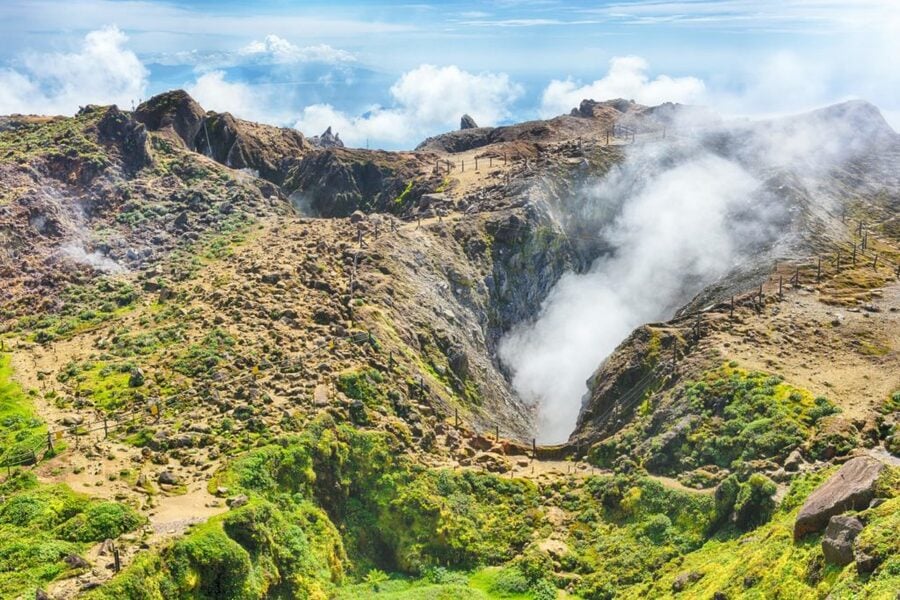
The team at Geosciences Rennes, a joint mixed research unit between the University of Rennes and the CNRS (UMR-6118), has been conducting monitoring experiments on the volcano La Grande Soufrière over the last 15 years. La Grande Soufrière is located in Guadeloupe, a French overseas region located in the southern Caribbean Sea.
Face à la reprise de l’activité du volcan observée depuis 2014, le laboratoire de géosciences a décidé de renforcer ses capacités de surveillance au sommet du dôme de lave en déployant un réseau de capteurs (par exemple, des Pt100 dans les fumerolles, des géophones sismiques 1D et 3D, des thermocouples dans le sol, des capteurs de pression et des Pt100 dans le lac d’acide bouillant). L’expérience positive acquise précédemment par l’équipe avec la gamme e.series de Gantner Instruments(e.reader, e.pac et e.bloxx) l’a conduite à retenir la gamme Q.series pour développer son nouveau réseau d’acquisition.
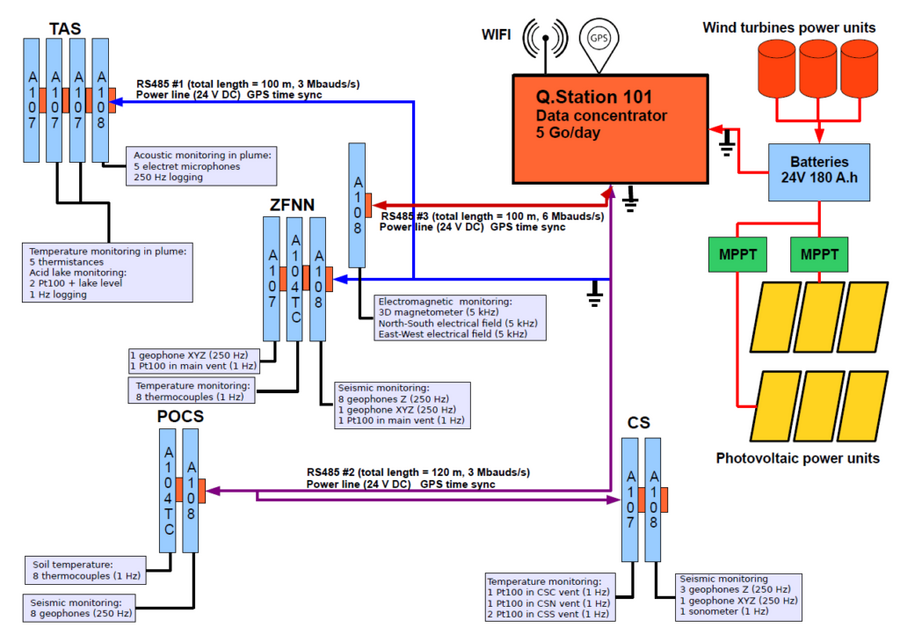
La figure 1 est un synoptique du réseau de base en fonctionnement depuis 2015 : une Q.station 101 accompagné de plusieurs modules Q.bloxx A108 et A107 répartis sur trois bus RS485. Les éoliennes et les unités photovoltaïques alimentent le réseau en électricité. Une liaison Wi-Fi longue portée est utilisée pour transmettre les données à l’observatoire du volcan situé à 10 km. Une antenne GPS est utilisée pour synchroniser la Q.station, ce qui est particulièrement crucial car une synchronisation temporelle précise est nécessaire pour corréler les données sismiques acquises avec les géophones connectés aux modules A108. En raison de leur polyvalence, les modules A107 sont utilisés dans les domaines les plus actifs où des mesures multiphysiques sont effectuées avec des capteurs résistifs, de tension ou de courant. La flexibilité des modules A107 permet à l’IPGP de tester en utilisant ses prototypes de capteurs lors de la campagne de mesure.
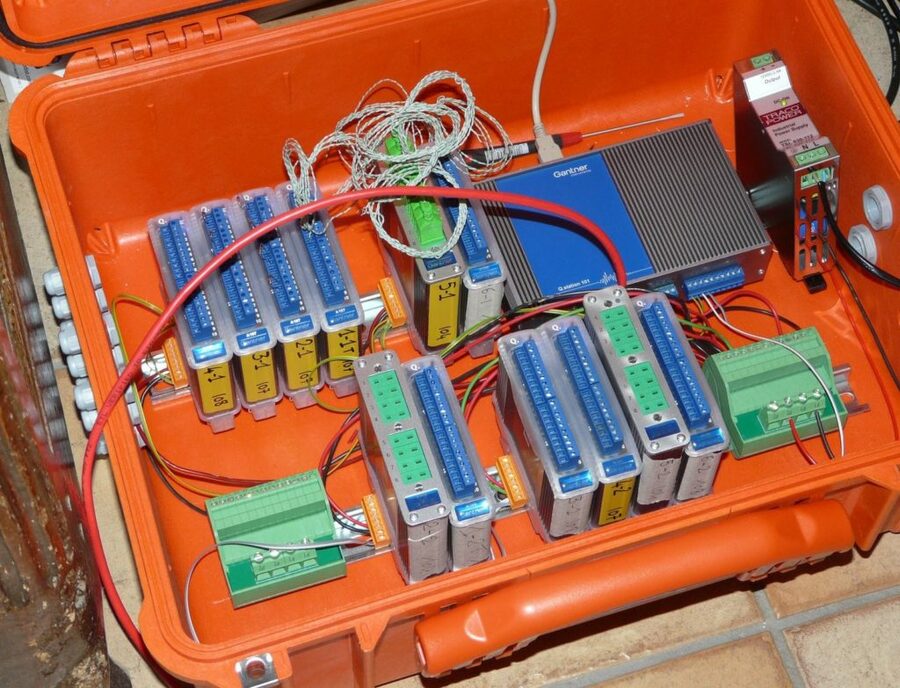
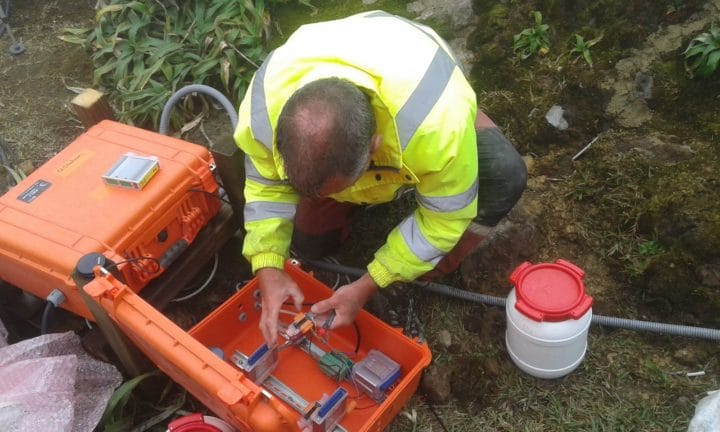
Les conditions environnementales au sommet du volcan sont très dures. Les principales difficultés sont les fortes pluies tropicales (8 000 mm par an), les vents violents, les orages et les gaz acides émis par les fumerolles. Malgré ces conditions difficiles, les systèmes Gantner Instruments restent opérationnels presque tout le temps. Les systèmes sont protégés par une technique de « double caisson ». Le premier caisson situé à l’extérieur sert à se protéger des fortes pluies et du vent. Les conditions à l’intérieur de ce conteneur correspondent à peu près à IP62 à l’exception des gaz acides présents. Un boîtier Pelican est ensuite placé à l’intérieur du premier boîtier, qui contient le système DAQ et protège de l’humidité et des gaz acides.
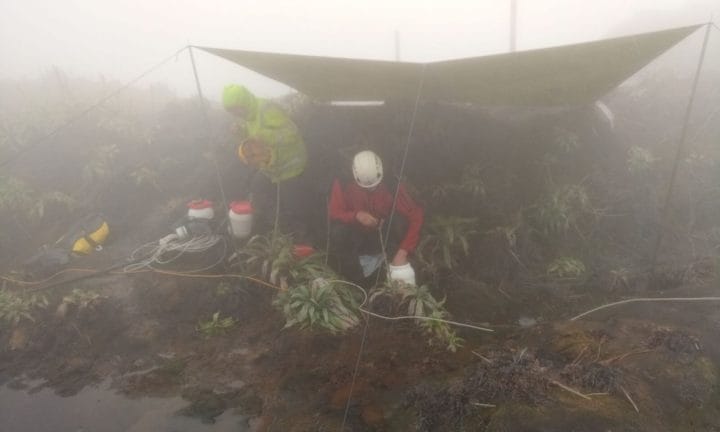
Le laboratoire Géosciences améliore actuellement son réseau d’acquisition en installant plusieurs Q.stations à différents endroits autour du volcan. Cette solution réduit la longueur des lignes RS-485 qui semblent sensibles à la foudre et la synchronisation temporelle GPS fournit une base de temps commune pour toutes les données de mesure.
Pour un exemple d’utilisation scientifique des données acquises avec la plateforme DAQ de Gantner Instruments, vous pouvez consulter notre récent article concernant « Changements brusques d’activité hydrothermale dans un dôme de lave détectés par surveillance combinée sismique et muonique » disponible en ligne.
More articles
GI.basic Formation en Rhénanie-du-Nord-Westphalie
Formation de base GI près de chez vous : nous serons en Rhénanie-du-Nord-Westphalie le 16 mai 2024
Read more...Intégration de Python – Un nouveau niveau d’automatisation et d’analyse
Les équipes d'ingénieurs s'appuient sur des outils puissants et personnalisables pour gérer des scénarios de test de plus en plus complexes. GI.bench comprend désormais un script Python intégré, permettant aux ingénieurs d'automatiser les flux de travail de mesure, d'effectuer des analyses avancées en temps réel et de s'intégrer de manière transparente avec des logiciels externes. Cette fonctionnalité exploite le riche écosystème de Python, garantissant flexibilité et efficacité dans les projets de test et de mesure.
Read more...Salon « Automotive Testing Expo North America » 2026
Nous serons présents au salon Automotive Testing Expo North America 2026 !
Read more...Venez nous rencontrer au Forum Nazionale delle Misure 2026
Rejoignez-nous au Forum Nazionale delle Misure, le principal rendez-vous scientifique italien destiné aux chercheurs, experts et professionnels du domaine des mesures.
Read more...